Women in Tech Hampshire - Allyship and Mentorship in Action
11 May, 202610 minutes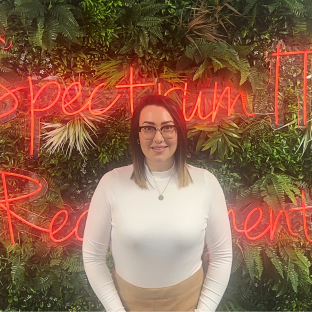

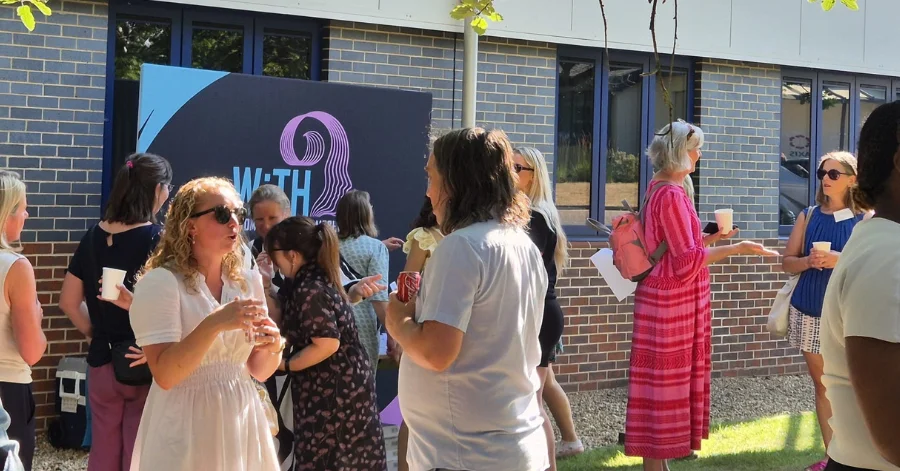
Our Women in Tech Hampshire community is going from strength to strength. We were pleased to welcome more than 80 people to our most recent event, with an increasing number of men joining the discussion and learning about some of the unique challenges faced by women in tech. The topic of the night was ‘Allyship and mentorship in action’, exploring how we can build confidence, open opportunities and create inclusive pathways across the tech industry.
We were joined by a fantastic panel of guests, who shared their own experiences and practical insights.
- Huw Fielding is Director of IT at Southampton Football Club, an industry that’s dominated by men (both in terms of football and tech).
- Sharon Jones is Maritime Enterprise Engagement Lead under the Regional Commander and employed by the Royal Navy as a civilian. She’s passionate about engaging with local communities.
- Vicky Brentnall is Director of Transformation at Procode, and a non-executive director for BrandPipe, a company that specialises in software and neurodiversity.
- Principal Engineer Callum Linington – who unfortunately had to leave the event shortly after networking – has also provided some valuable insights into the topic for this write-up.
The evening was hosted by Spectrum IT’s Lauren James. 
Understanding allyship
We opened the evening with a discussion on what allyship means to each of our panellists, and how to put it into action. Huw explained that it’s about, “understanding where the challenges are, understanding what the problems can be and how we make the changes.”
Vicky added: “[It’s about] being able to advocate for people and being able to stand up for what you believe in”. She admitted this can be potentially difficult, depending on how senior you are in an organisation and how comfortable you feel with speaking up. She shared an example from the early days of her career where felt shut down every time she said something. A male colleague noticed and highlighted the differences in the way they were treated. This experience has stuck with Vicky, and she passionately advocates for all people at any stage of their career.
Sharon said that it’s reminding others of the culture they’ve signed up to, recognising when action is needed and doing something about it. Across the defence sector she works in, they have champions, such as race and diversity champions or gender champions, who have worked hard to learn about the challenges and advocate for others. “Feeling that allyship, knowing there’s somebody I can take the tiniest little thing to and that it will get raised without being problematic – I think that’s really important.”

Callum shared his own thoughts on allyship through the lens of neurodiversity: “We talk a lot about allyship as a mindset. I think it's more useful to talk about it as a challenge to current systems and habits. The systems most workplaces run on – how we hire, how we delegate, how we assess potential – were designed around a neurotypical default. Allyship in action means questioning those systems, not just supporting people who struggle within them. Advocating for someone outside the room means something specific in this context. It means making sure people are careful about how they perceive a colleague who is neurodiverse. It means pushing back when someone's quietness gets mistaken for disengagement, or when a different communication style gets read as a lack of capability. It means respecting someone's working style even when they're not there to explain it themselves.”
Putting allyship and mentorship into action
It’s one thing to understand allyship and another to put it into practice. Callum has since shared a practical example of how to move the conversation from intent to impact, with a real-life example from his own leadership. “Due to my own neurodiversities, I decided to redesign our hiring process – laying it out in a way that I would have been comfortable with as a candidate. At the start of every process, I made sure everything was clearly set out: timings, what we were looking for, how we'd progress through each step of the interview, and the stages of the overall process. In one interview, we gave the candidate a choice in how the conversation flowed, either structured questions or a more open walkthrough of her experience. We focused on listening for the key competencies, just in a way that suited her. We hired her. She was brilliant. And I’m convinced that if we’d stuck rigidly to our usual process, we might never have seen her full potential. We’d have missed out on real talent simply because the process didn’t allow her to shine.
That's what allyship in action looks like. It's redesigning the system so more people can show you what they’re capable of.”
Lauren asked the panel how they lead inclusively when there is pushback or resistance from others. “It's always about listening and being sensitive to the dynamic in the room,” said Sharon. “In a previous role, we were having a culture meeting, and [a senior colleague] used a word that would be considered inappropriate. I checked with my colleague [after the meeting], ‘Did I hear that?’ ‘Are you offended?’ And she confirmed for me that I heard that word and said, you don't need to do anything about it.” It’s a situation many of us might find ourselves in – do we challenge the senior in the room in front of the others because of the language they used, even if the person who might have felt offended or excluded by the language wouldn’t want that? Yet it’s also important to maintain an inclusive culture and reinforce expectations.

It can be hard to know how to handle these kinds of situations when something might not directly offend you, but it does someone else. “I think there's forever changing advice, guidance and ways that we should understand and keep learning,” said Huw. “So, in those scenarios, trying to recognise if someone's felt uncomfortable, or if suddenly someone who's contributing loads is then very quiet.” Lauren pointed out that women, in particular, want to be very sure before they call something out.
Many companies introduce mentorship schemes in a very ‘tick-boxing’ manner, without taking real action, whereas having and being a mentor can be a very valuable experience. Vicky stated, “As a company, a lot of people think they should have a mentor program in place, rather than about what they’re trying to achieve. It should fundamentally change something and shift something for that individual.”
Sharon advised: “You've got to come back to, ‘Why are we introducing a scheme?’ ‘What are we trying to achieve?’ I have seen schemes work where actually it's reversible, and you're bringing in perhaps your most recent hires, and they are coaching more experienced staff, because they gain from that relationship. It’s about fresh eyes in the organisation.” After a negative experience with an internal mentor, Vicky looks for external mentors, which she says can be really valuable. She mentions a fantastic charity called Mentor Mums, which matches parents and carers returning to work with volunteer mentors who’ve done the same in similar industries and faced similar challenges.
Current challenges and barriers
One of the biggest problems is that some leaders are still playing it safe when it comes to allyship, in fear of getting it wrong. “A lot of people I know would be terrified the idea of standing up here and doing this sort of thing,” said Huw. “Not a fear of public speaking, but a fear of saying the wrong thing. I think that's one element. The other [element] is just ignorance of the damage caused by not being allies or the lack of awareness of what needs to happen.”
Vicky shared an example of how allyship can work well across different cultures. She took over a team in South Africa that had a completely different way of working. “Because I took the time to understand them, they became brilliant allies, and they were able to advocate for what I was doing. They were able to say they were happy with someone in the UK managing them.” When a South African boss went out to visit them, the team stood up for Vicky’s leadership and explained that they were happy with the way things worked. “Watching how they work as a team taught me so much about allyship and about advocating for others.”
Wrapping up and audience questions
Before throwing it to the floor for audience questions, Lauren asked the panellists what the one thing people should do differently when they leave tonight should be. “I think for me personally, it's really interesting to hear all this talk about assumptions… and sharing experiences you can't understand,” said Huw. “I think it's understanding as best you can other people's perspectives. I think the biggest challenge for everyone, before you react in any way, is just to try and understand the perspective.”
Vicky said that it’s about having the confidence to stand up and make sure you do advocate for those around you. “It's really hard sometimes in the moment to stand up… but I think it's important that we do stand up for what we believe in.”
Sharon reiterated that it’s important to find someone to look up to. She recognised the importance of groups like Women in Tech Hampshire for making those connections. She also talked about the Dorset Coding Week, which introduces over 5,000 young people to a coding activity with a tech volunteer in the classroom, exposing children to careers and opportunities.
After such an inspiring conversation, we had a few thoughtful audience questions. One attendee asked for advice on being allies for ourselves within an industry with inherent bias. Vicky answered: “Don't be shy about being who you are. You know, I work four days a week. I'm a director. I'm one of the only people at that level who works four days a week. When I was looking for a job. I was really clear that at this moment in time, my work/life balance is important to me. I think we need to stop apologising for the fact we might need flexibility. We might need to do things differently, because it's not just women. My husband works three days a week because he does the majority of the childcare. And I, for a long time, worked full time. I went back after my first daughter and I almost hid the fact that I had kids and that I needed flexibility, but I learned that I shouldn't hide that.”

Huw said it can start with the way we recruit for roles: “What's the way that we're going to recruit now that actually opens those doors and breaks down the barriers? Is it open days? Is it through networking?” He also talked about women coming back into the field after maternity leave as an area for improvement: “Everything says that welcoming women back into the economy after maternity is better for the country. And yet we build this system that doesn't support it. So how do you make that better?”
“It's all about human connections,” concluded Sharon. “We could help that next generation entering the workforce. Our young people need those connections to learn and to grow. So, we have a responsibility to provide that skilled community to develop a boost in our workplace. I think we can all do something about it.”
With that, we wrapped up our evening, after inspiring conversation and discussion. We’re always overwhelmed by the positive feedback for these events, and we can’t wait for the next one.