Women in Tech Hampshire – Empowering Women to Excel in Tech
05 Jan, 202612 minutes
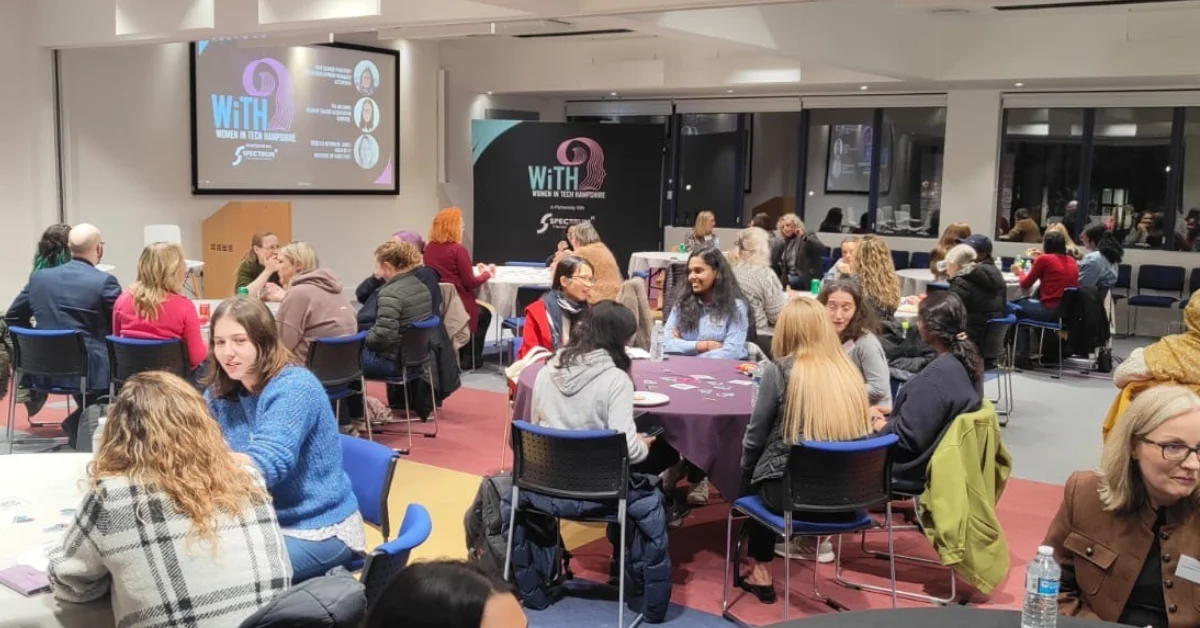
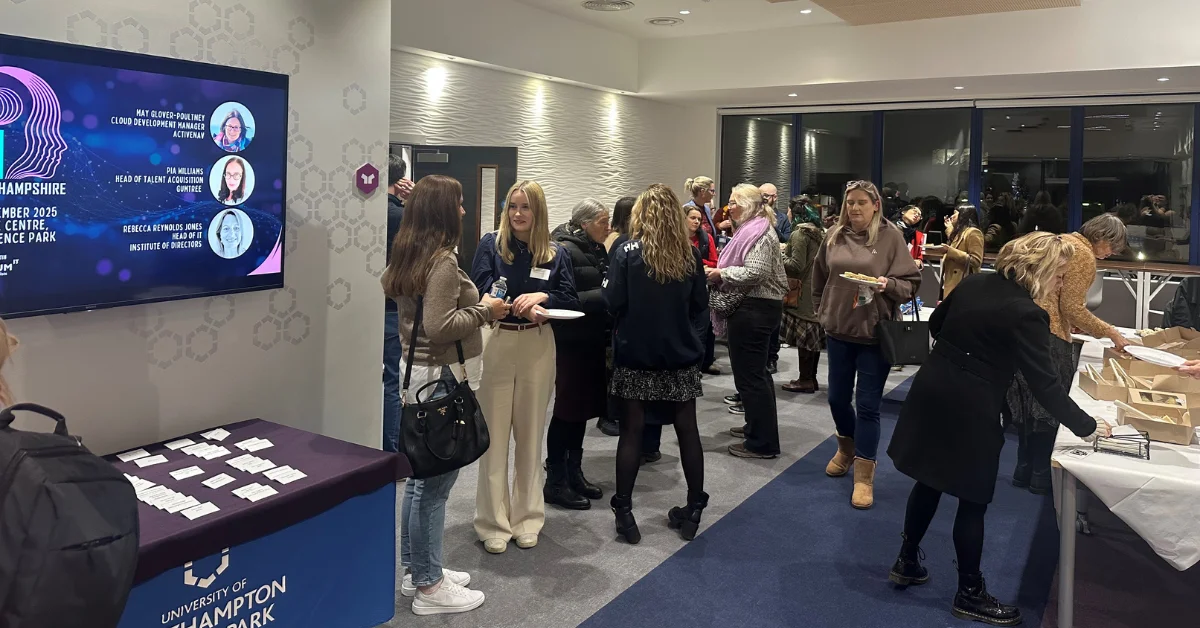
Our last WiTH meet-up of 2025 was a great success. We had the same energy and interaction at end of the year as we did at the start! It’s been incredible to see so many returning faces throughout the year, as well as lots of new people.
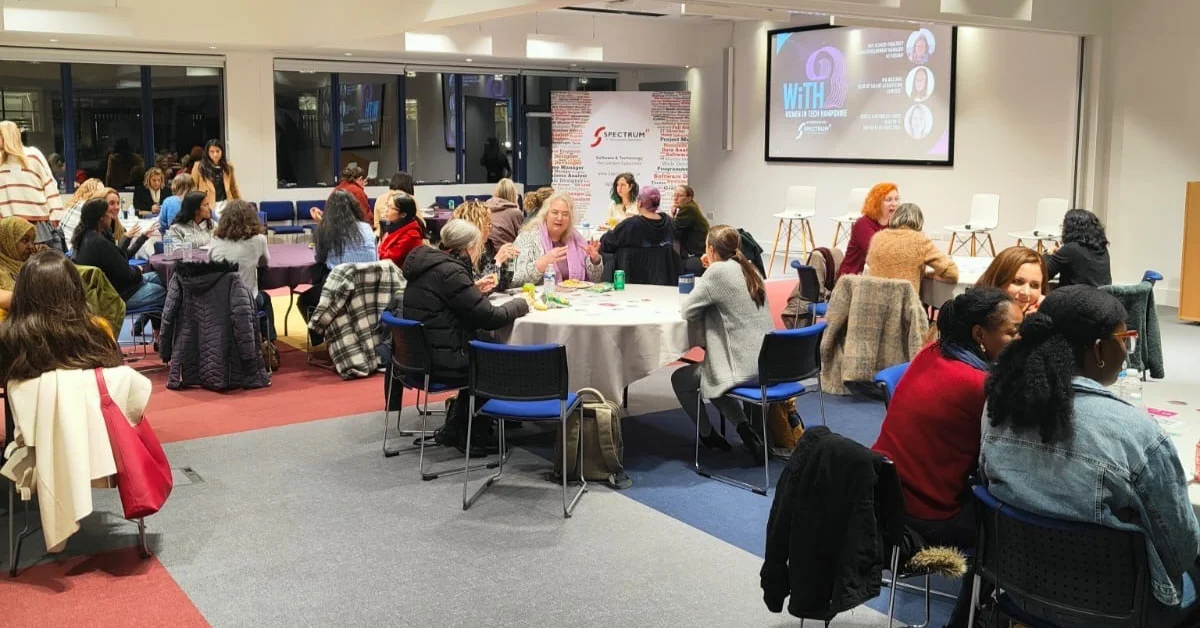
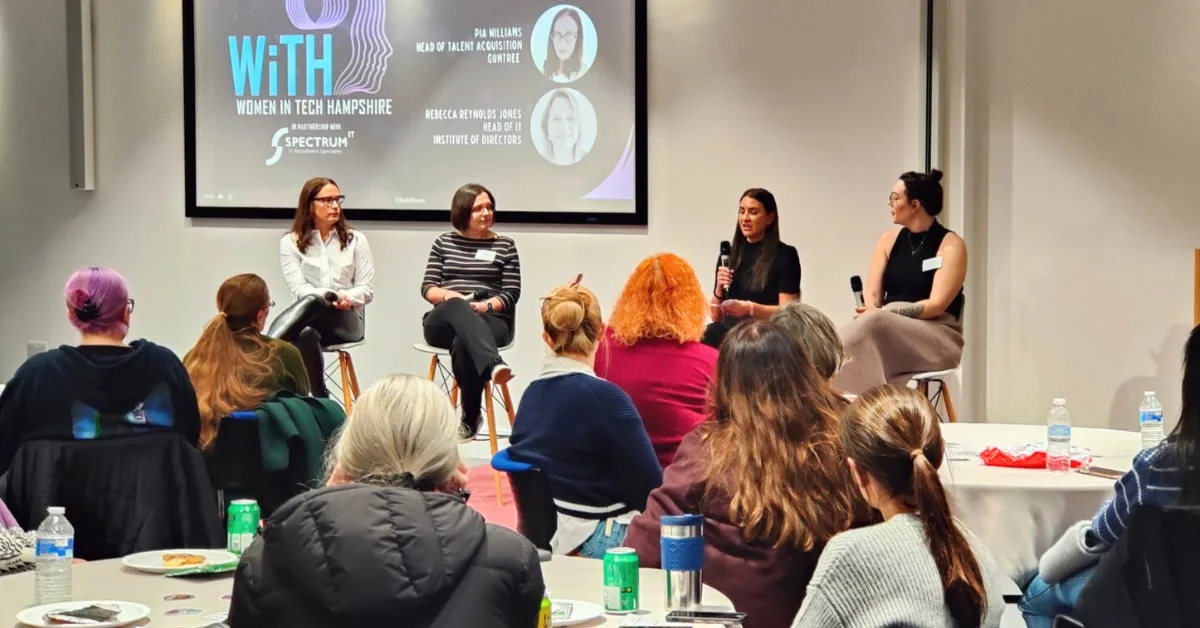
70 people joined us for a panel-style discussion, with lots of audience interaction and a chance to network with likeminded individuals. Our expert panel shared insights into what hiring managers look for, the skills that stand out and how to build confidence in your career.
We welcomed May Glover-Poultney, Cloud Development Manager at ActiveNav, who previously spent over 21 years at IBM and has vast experience of working with and building technical teams. She was joined by Pia Williams, Head of Talent Acquisition at Gumtree.com, bringing more than 20 years’ experience in recruitment and talent acquisition.
Our final panellist was Rebecca Reynolds Jones (Bex), Head of IT at Institute of Directors. Unfortunately, Bex was ill on the night, but she was there with us in spirit. She has provided her thoughts on key topics, which we include within this write-up. All three panellists have also provided answers to questions we didn’t have time to cover on the night.
Understanding what hiring managers are looking for
We kicked off the evening with our main panel, introducing May and Pia in conversation with WiTH’s Amy and Lauren. We wanted to know what our leaders look for in their candidates, in terms of technical and soft skills, as well as other qualities and strengths that highlight suitability for a role. For Bex, who contributed her thoughts post-event, soft skills are always her priority, focusing on communication, adaptability, curiosity and self-motivation, the latter being of particular importance in a fast-paced and remote-working environment. “Most technical roles require a good degree of curiosity – asking the right questions about how to solve problems,” she says.
May explained that well-designed technical tests can help to evaluate a candidate’s skills and suitability. She says they should be designed to understand how a candidate thinks and approaches problems, rather than simply being a pass/fail benchmark. Incorporating flexibility also helps to accommodate those from diverse backgrounds. She points out that it’s important to acknowledge that women can encounter difficulties during technical interviews, noting women often feel under increased pressure to demonstrate competence, which can be stressful.
When hiring, it’s important to look for potential in those who might not have followed a traditional route into tech and have great transferable skills from other industries. Bex says that she’s a natural opportunist: “Perhaps they’ve been involved with sport in the past – their team ethics will likely be extraordinary; perhaps they’ve worked in the care industry – their empathy and bringing users ‘on the journey’ is likely going to excel; or maybe they have a financial background, and in which case their budgeting and contractual management is likely to be better than average.” Pia agrees with this sentiment, reminding the audience that people bring different skillsets and perspectives, and this diversity should be valued during hiring.
Having robust, human-centred and structured hiring processes can help to find these candidates who might be a perfect fit. Pia emphasised how crucial it is for organisations to establish and adhere to structured hiring processes.
Candidate experience is something all our panellists were passionate about. For Pia, it’s about treating candidates with respect at all stages, and maintaining kindness and empathy throughout the process. Lauren concurs saying it’s important to prioritise the candidate experience during interviews – candidates are evaluating the company as much as they are being evaluated themselves.
This responsibility doesn’t stop after a candidate has been hired and should continue into proper onboarding processes to set new employees up for success. Pia suggests that if a new hire struggles due to inadequate training, this reflects a failure of the business, not the candidate.
Unfortunately, not all hires work out, but there are always lessons to be learned and it can help to inform hiring practises going forwards. Sometimes it’s not down to the individual themselves underperforming, but them not being in the right environment to thrive. For example, May describes a past hire where a candidate ultimately wasn't right for the role. They were more passionate about working for the company, rather than the role itself. The candidate had not been fully truthful about their skill level, leading May to trust her instincts more strongly during evaluations.
Pia explains how she uses cases studies to evaluate technical and analytical skills, and consistent assessment processes. However, even the most robust of hiring evaluations can still lead to hiring mismatches sometimes.
Leaders should have a responsibility to help people succeed. As Bex says: “We should always be looking to set people up for success and not to catch them out or highlight the reasons why not to retain them.”
The use of AI and crafting great CVs
It’s hard to ignore the role of AI in hiring these days, both by recruiters and candidates. We had an interesting discussion on the topic around the use of AI at all stages of the recruitment process.
May points out that it can be a challenge to evaluate candidates when AI can be used to generate technical answers. One audience member shared an experience where they had ended conversations with candidates after discovering they had used AI in the application process. However, businesses also hold some responsibility to set clear expectations around acceptable AI use.
AI is frequently used in CV creation and evaluation. It is a powerful tool, but it needs to be used in a thoughtful way – it’s an aid and not a replacement. As Amy says: “Generic, copy-and-paste AI outputs undermine authenticity and can hurt a candidate’s chance of standing out.” Pia agrees, saying that AI-generated CVs often lack individuality, and Lauren confirmed that recruiters can quickly spot AI templates.
So how should women looking for tech roles be approaching their CVs? May says that during her own job searching, she had one base CV and then created tailored, specific versions for each role. Lauren suggests adding a short, personalised introduction at the top of a CV to stand out from the crowd, especially among AI-templated submissions.
Pia also says that recruiters vary widely in what they prioritise – she filters out cover letters, but others value them. She suggests short introductory videos can be a great way to showcase your personality.
Considering the future when hiring
We covered so much material on the night, but there were a few questions we didn’t quite have time to get through, so we asked out panellists if they could provide feedback on a few more topics.
We were interested to find out what steps organisations can take to create hiring and development processes that support diversity and inclusion. Pia says that it begins with the data, understanding what diversity and inclusion looks like in your organisation and making it part of your talent strategy at every step. This starts with creating gender-neural job adverts, using anonymised functionality in application tracking systems to remove names, and proactively undertaking diversity hiring through balanced shortlists and diverse interview panels.

May says you need to consider whether you really require a candidate to have a degree or other traditional qualifications to succeed in the role you’re hiring for. If not, take these requirements out of the job description to encourage those from less traditional routes to apply. You can include a statement in the job advert to encourage people to apply even if they don’t meet all the criteria – statistics show that women tend to apply for a job where they meet most of the requirements, whereas men will apply if they meet a lower number. She also reminds recruiters to reach out to candidates and ask if they have any needs that need to be accommodated at interview – which is especially important for neurodivergent candidates.
Bex says companies should use diversity to their strategic advantage. Diverse groups have different interests and skills, and it’s also important to educate your organisation on diversity as it expands far beyond gender and culture. She recommends looking at the diversity iceberg to understand how much diversity lies below the surface.
We asked our experts what skills and mindsets they feel will become increasingly important for tech teams in the next few years. For Pia, it’s a capacity to learn, curiosity, critical thinking, problem solving and communication/collaboration. May says that for roles where AI is likely to have a big impact in the future, such as software development, it’s a good idea to build familiarly with current AI tools, both the advantages and disadvantages, and how they could be used within your current role. There was also a general agreement that there will be a bigger focus on data, AI and automation, rather than hardware and networking.
When hiring, it’s important to have one eye on the future, so how can recruiters best approach this? Bex says to focus on soft skills: “You can train the hard skills, but you can’t easily train on skills such as communication, interpersonal, work ethics, motivation and passion.” If you hire people who are passionate about your brand or missions, you’ll get more out of them.
This feeds into how you can get your existing teams to tick. Bex says you need to get to know your people, what motivates them and how they like to be managed. This means understanding their communication style – one useful resource is The Culture Map – Erin Meyer. She also suggests making yourself approachable, creating a safe space for your team and celebrating your wins as a team.
The final word
This event was an eye-opening and inspiring experience. We’ve had some great feedback from attendees who came along on the night. The discussion highlighted the realities and challenges for women in tech, but also the responsibility that lies with organisations for creating supportive pathways for women to succeed.
Our experts have provided a few useful additional resources for women looking for their next step in the tech industry.
Build your confidence:
Amy Cuddy – Your Body Language May Shape Who You Are
Communities and platforms for a job search in tech:
Welcome to the Jungle
She Can Code
Built In
Cord
Hackajob
Our next event will be on 11th February 2026, follow our Women in Tech Hampshire LinkedIn page to find out more and book your space!
Related Posts

Contractor Legislation in 2026: Are you at risk?
13 Mar, 2026