Hampshire AI March 2026 – Lessons from Microsoft on AI Adoption
31 Mar, 202611 minutes
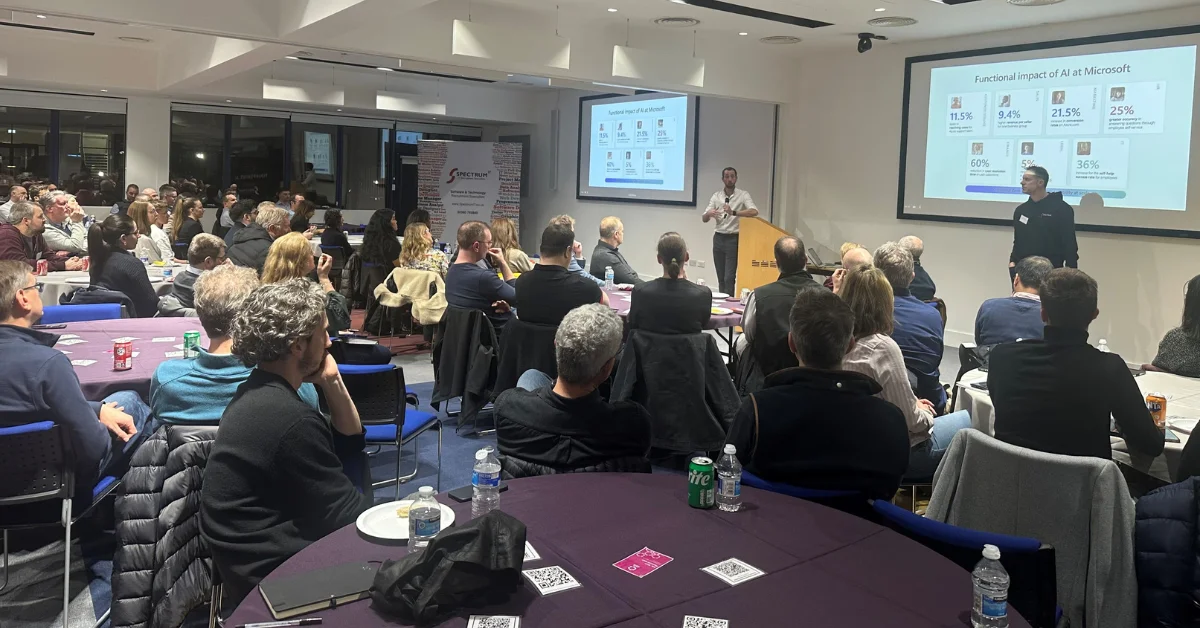
Each Hampshire AI event tends to capture a moment in time, reflecting how the conversation around AI is evolving. This one stood out, not just in scale, but in focus.
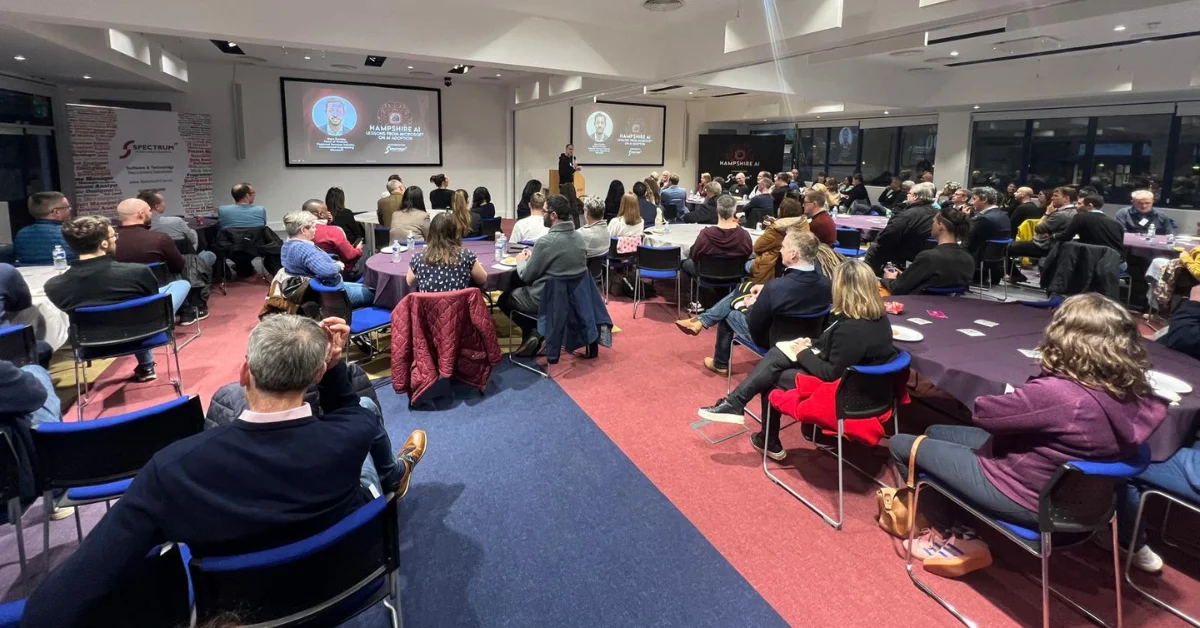
With over 100 people in the room, our highest turnout to date, there was a noticeable shift in energy from the outset. The discussion had moved on, less about what AI might become, and more about what it actually takes to make it work.
The theme for the evening was AI adoption. Not in theory, but in the reality of moving from experimentation to something that delivers value. And judging by the questions on the night, it is something many organisations are still working through.
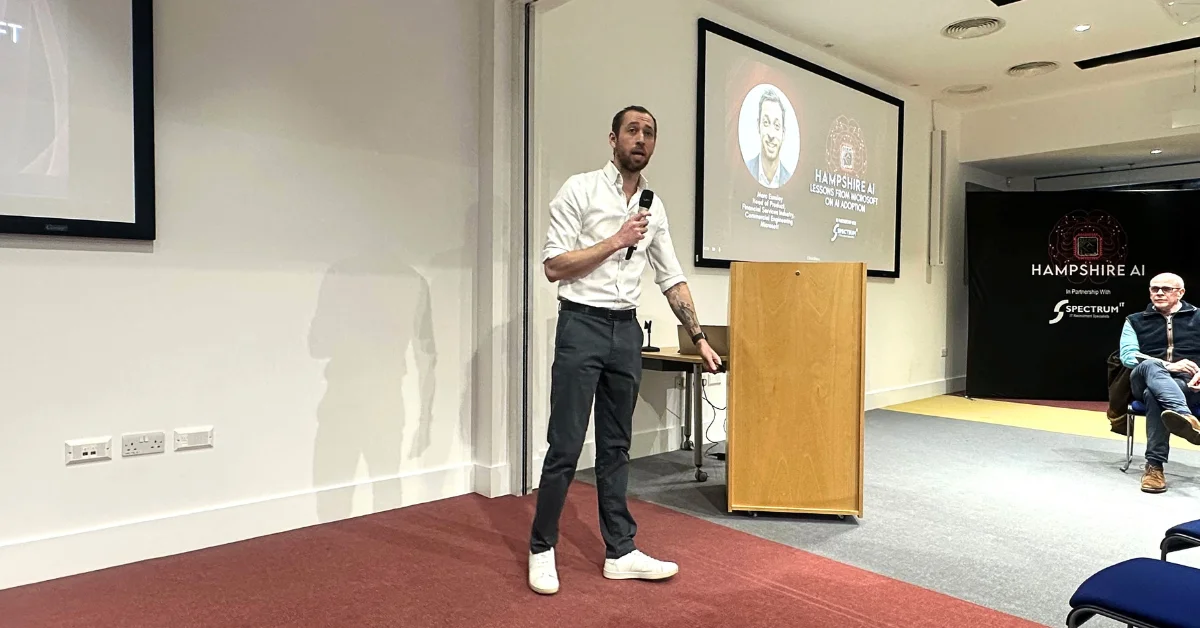
Leading the session was Marc Esmiley, Head of Product for Financial Services Commercial Engineering at Microsoft. He works closely with organisations navigating AI and cloud transformation, balancing innovation with risk, resilience and real-world delivery. That perspective came through immediately. This was not a talk about tools in isolation. It was about what happens when those tools meet the complexity of real organisations.
Marc opened with a simple but familiar observation. Most boards now want AI in the business. Far fewer know what that actually means in practice. That gap between ambition and execution quickly became the thread running through the discussion.
He described a pattern many in the room recognised. A surge of interest. A wave of pilots. A long list of ideas. And then, friction. Data that is not ready. Processes that are unclear. Metrics that do not quite define success. Teams exploring but struggling to move beyond that stage. It was not framed as failure. More as a funnel. Plenty of activity at the top, far less making it through to production. And the reason felt familiar. AI does not fix broken processes - it tends to expose them.
Starting Where the Value Actually Is
Rather than jumping straight into large scale transformation, Marc grounded the conversation in something more practical. Where does AI genuinely add value today, and what role do tools actually play in that?
This quickly led into a question many teams are currently debating, whether they should be using GitHub, Foundry, or an AI agent framework. Marc’s response was telling. It is less about choosing a single platform, and more about understanding the problem first. Simple, well-defined use cases can often be solved with lightweight tools. More complex scenarios, particularly those involving multiple systems, workflows or data sources, require more structure and orchestration.
He shared how Microsoft has approached this internally, building a focused agent to help employees write OKRs more effectively. Trained on how strong objectives should be written within the organisation, it provides guidance in a simple, accessible way. A small problem, clearly defined, solved with a targeted tool. That pattern came up repeatedly throughout the session. The most effective use of AI was not about selecting the most advanced tool, but about applying the right level of tooling to the right problem.
The takeaway was clear. The tool is rarely the blocker. The surrounding context is.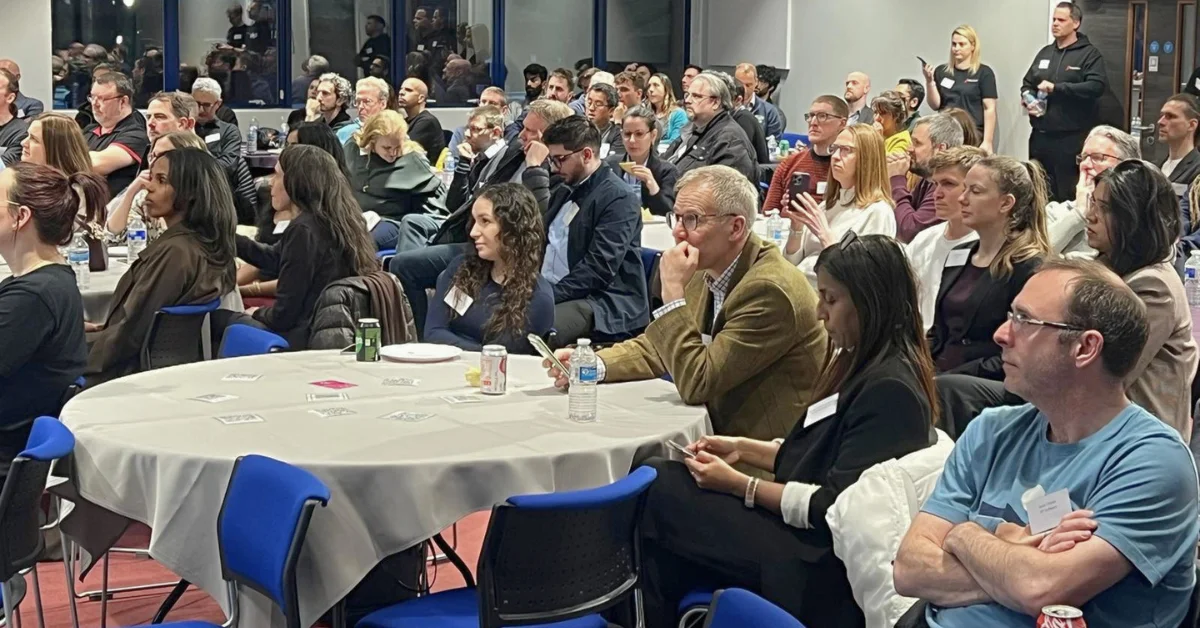
When Business Meets Engineering
From there, the conversation moved into something deeper - process. Not the ideal version, but the reality most organisations operate within. Marc described how even simple changes can become complex when they move through layers of notes, emails, helpdesk queues, backlog prioritisation, development cycles and testing. What should be straightforward can take months.
In this context, AI is not just about automation. It is about narrowing the gap between business intent and technical execution. Allowing ideas to be explored earlier, refined faster, and validated before they enter long delivery cycles. But that shift also raises new questions, particularly around ownership, especially when someone in the business builds something useful.
Marc acknowledged that this is still evolving. Ownership, he suggested, is less about who creates something and more about who maintains it once others begin to rely on it. Without visibility and shared understanding, even helpful tools can quickly become difficult to manage.
Trust, Testing and Non-Determinism
Trust was a theme that ran through both the talk and the audience discussion.
This highlighted a key challenge around how organisations become comfortable with non-deterministic AI systems, where the same input does not always produce the same output, unlike traditional software. Marc addressed this directly, noting that the mindset needs to shift.
Rather than expecting certainty, organisations need to think in terms of thresholds and sampling. What level of accuracy is acceptable, where human oversight should sit, and how confidence is measured over time all become more important. It is not as clean as traditional testing, but it reflects the nature of these systems more accurately. He also reinforced the importance of observability. Understanding how systems behave, how they are used, and where they fail is key to building trust over time.
Skills, Roles and the Shape of Innovation
As the discussion evolved, it naturally moved into skills. If AI can generate code, accelerate development and enable non-technical users to build solutions, what happens to traditional roles?
This led into a broader question around whether innovation itself could become limited if AI is built on existing human knowledge, and whether we risk reinforcing what already exists rather than creating something new. Marc’s response pointed to change rather than constraint. We are already seeing a blending of disciplines. Engineers with stronger business awareness. Business users who can prototype technical solutions. Roles becoming less defined by a single skillset and more by the ability to connect ideas, tools and outcomes.
The conversation then shifted to the impact on early careers, particularly what happens to junior developers if AI begins to take on more entry-level work. Here, a different perspective emerged. Many new entrants are arriving with broader exposure and faster learning curves because they are already using these tools. The challenge is not capability but helping them understand full product lifecycles and long-term ownership.
Regulation, Risk and Reality
The discussion around regulation added another layer of realism. This raised a question around whether organisations are increasingly focusing on lower-risk use cases, given growing scrutiny from regulators, particularly in sectors like financial services. Marc made it clear that, in many industries, avoiding complexity is not an option.
Instead, the approach involves working alongside regulators. Co-authoring frameworks, building evidence through real use cases, and taking systems through structured review processes.
He also shared how even relatively straightforward AI services require significant work beyond the technology itself. Documentation, contractual safeguards, cross-border data considerations and governance all play a role in getting solutions into production. Production AI, as the discussion made clear, is not just a technical challenge. It is an organisational and regulatory one.
From Ambition to Practice
As the evening drew to a close, the discussion became broader and more reflective, moving beyond individual use cases to what the next phase of AI adoption might look like. This included a forward-looking question around whether AI systems will eventually begin to optimise themselves, not just generating outputs, but recommending the best architecture or approach to solving a problem.
Marc pointed to something already emerging. As systems gain access to deeper context, including logs, configurations and shared knowledge, they are starting to move beyond simple responses towards more informed recommendations. Not fully autonomous, but increasingly aware of the environments they operate within.
The conversation then shifted back to something more immediate. As more people build tools inside the business, how do organisations avoid fragmentation? Here, a familiar theme emerged. Visibility and shared context are essential. The more these tools become part of everyday work, the more important it is to understand what exists and how it is used.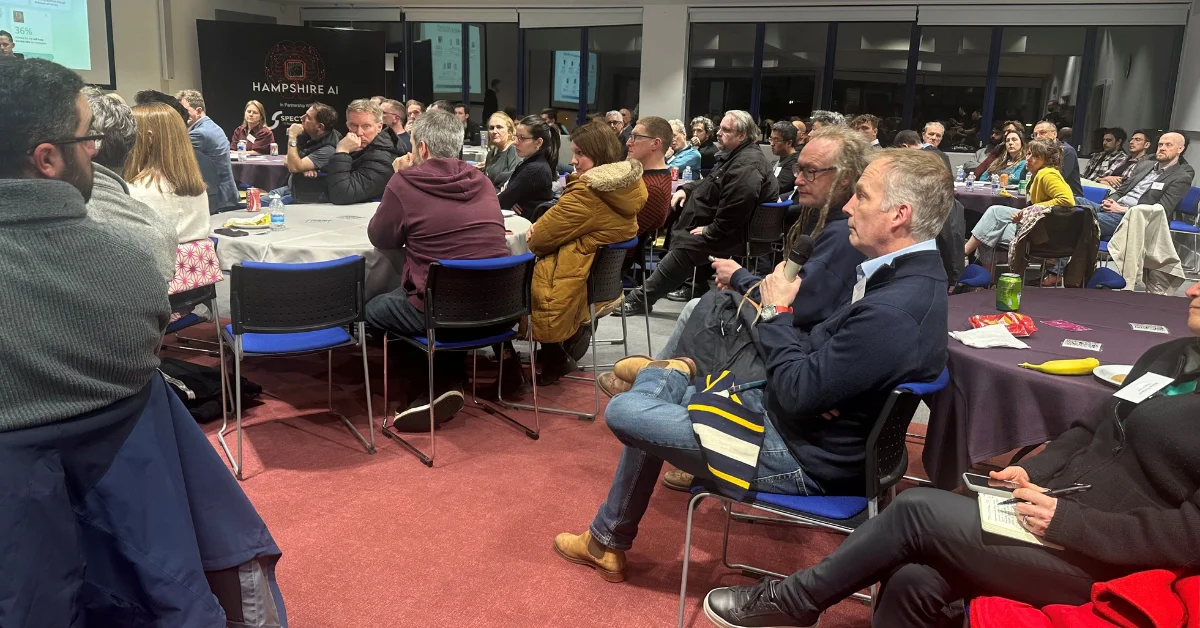
It also led back to adoption itself, and why some organisations are still not seeing the gains they expected. Marc’s answer was simple, but powerful. Adoption is not just about access. It is about behaviour. If AI tools sit outside existing workflows, they remain optional. If they become part of how people work every day, they begin to deliver value. That might mean recording calls, structuring information differently, training teams properly, or building internal champions. None of it is particularly glamorous, but it is what drives real change.
Key Reflections and Takeaways
This Hampshire AI session felt like an important moment for the community. With our biggest audience to date, the level of engagement made it clear that things have moved on. There is now a clear shift from interest to implementation, with organisations focused on making AI deliver practical results.
We were grateful to have Microsoft share such an honest and practical perspective through Marc’s session. Rather than offering simple answers, the evening surfaced the realities of adoption and the challenges that come with it.
There were plenty of takeaways for attendees to reflect on. From choosing the right tools for the right problems, to rethinking processes, ownership and trust, the discussion provided a lot to take back into day-to-day work.
As ever with Hampshire AI, the value was not just in the content, but in the conversation it sparked. The ideas shared throughout the evening will no doubt continue to shape how many approach AI within their own organisations in the months ahead.
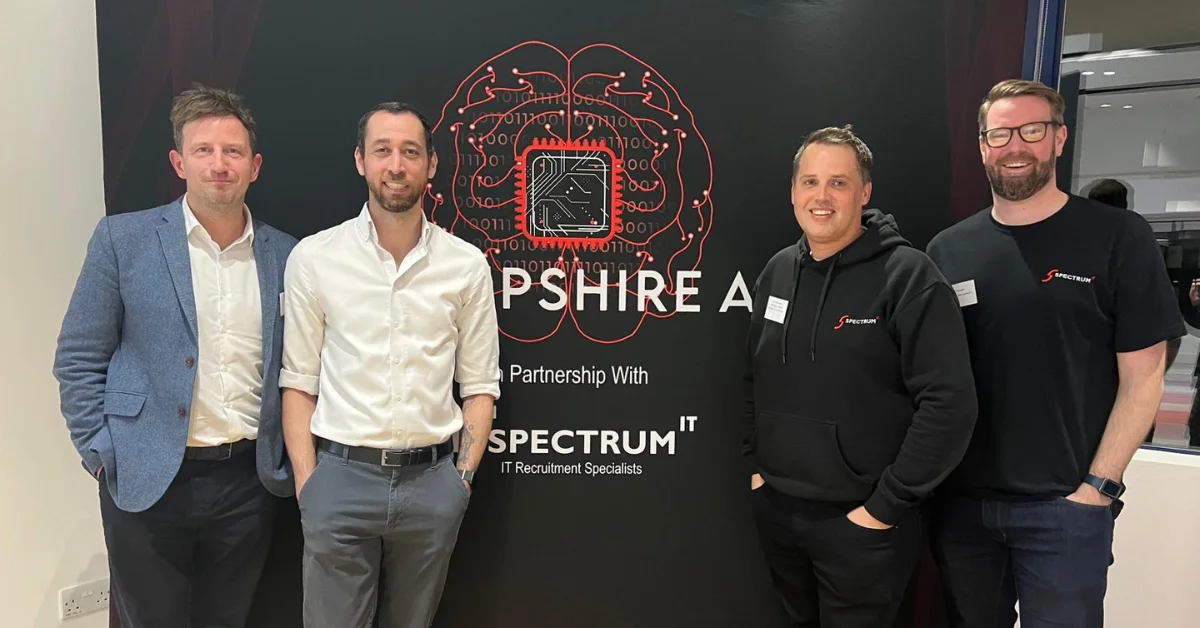
If you’re interested in coming to our 2026 events or finding out more, please join our Hampshire AI LinkedIn group and we hope to see you soon.
Related Posts

Contractor Legislation in 2026: Are you at risk?
13 Mar, 2026