What to expect at Women in Tech Hampshire
14 Apr, 2026





When hiring tech talent, contractor day rates look expensive when compared with the salary of a permanent employee. This comparison understandably leads to the assumption that permanent hires are more cost-effective. However, this rarely reflects the full picture. When you take into account employment costs, utilisation and flexibility, the overall difference is often less significant than it first seems.
The reality behind the numbers
Contractor day rates are visible and simple: a single figure applied to the duration of a contract. Permanent salaries, however, represent only part of the true cost of a new hire. To make informed hiring decisions, you need to compare the total cost of engagement, alongside the value each hiring model offers.
For example, a £80,000 salary can translate to a total employment cost of £118,850 or more once employer costs, benefits and overheads are included. This is where headline salary comparisons can become misleading, and why the difference between hiring models is often smaller than it first appears.
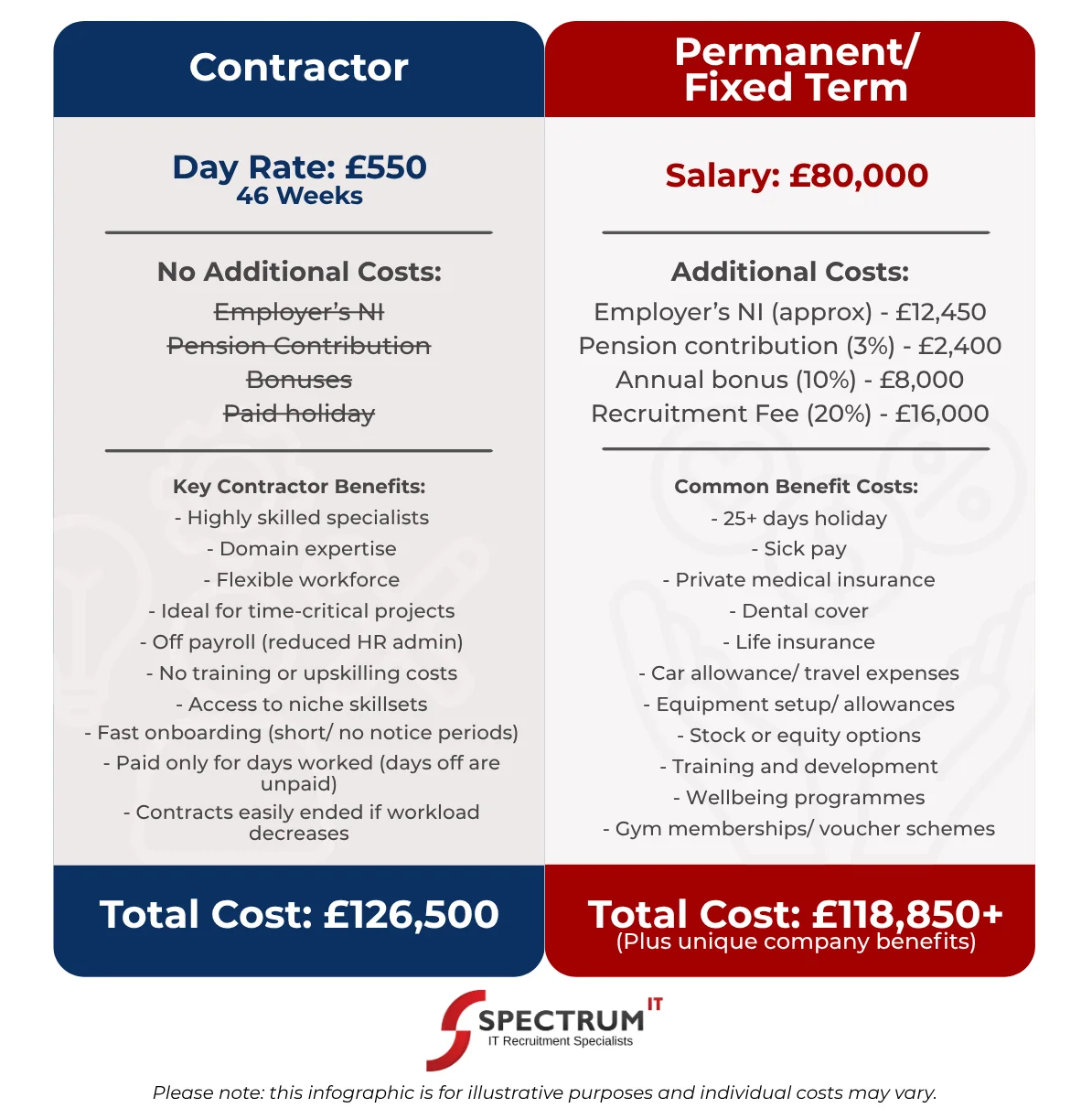
The pay structure for contractors is straightforward. As a business, you pay only for the work completed based on an agreed day rate.
Other considerations for using contractors include:
Contract budgets are often forecast at 100% utilisation across the full duration of a project timeline, however typically utilisation will be lower due to planned time off and project pauses within that timeframe. During 2025, Spectrum IT recorded an average contractor utilisation rate of 87.52%. Factoring in realistic utilisation provides a more accurate view of project spend and helps you forecast budgets more effectively.
Permanent hires are more complex, as the salary reflects only the base element of a wider employment package.
Additional employment costs typically include:
While the total of these additional costs varies, the true cost of employing a permanent member of staff in the UK is typically 1.25 to 1.4 times their base salary (Grove HR). For senior roles or highly competitive tech positions, this total employment cost can be even higher. Some of these costs will stabilise after the first year, but many are ongoing.
This doesn’t make permanent hires the wrong choice. Instead, it highlights why salary and contractor day rates are rarely a like-for-like comparison.
While cost is an important factor, hiring decisions should also consider the value each type of hire brings to the organisation.
Contractors can be particularly effective when you need:
Contractors aren’t always the right answer, and there are times where a permanent hire is the more strategic choice.
For most organisations, a blended tech team offers the best of both worlds, retaining reliable and skilled permanent staff and bringing in top contract talent for their flexibility and expertise, complementing the internal team.

When designing your hiring strategy, remember base pay structures rarely tell the whole story.
The most effective workplace strategies consider:
With intentional and smart use of contractors, you can create effective blended teams, built around choosing the right solutions at the right times.
Engaging with a specialist IT recruitment partner can help drive these decisions. Spectrum IT can provide transparency around cost comparison, advise on current market conditions, and help you choose the right hiring model for your needs.