Women in Tech Hampshire - Past Voices, Lasting Impact
02 Mar, 20269 minutes
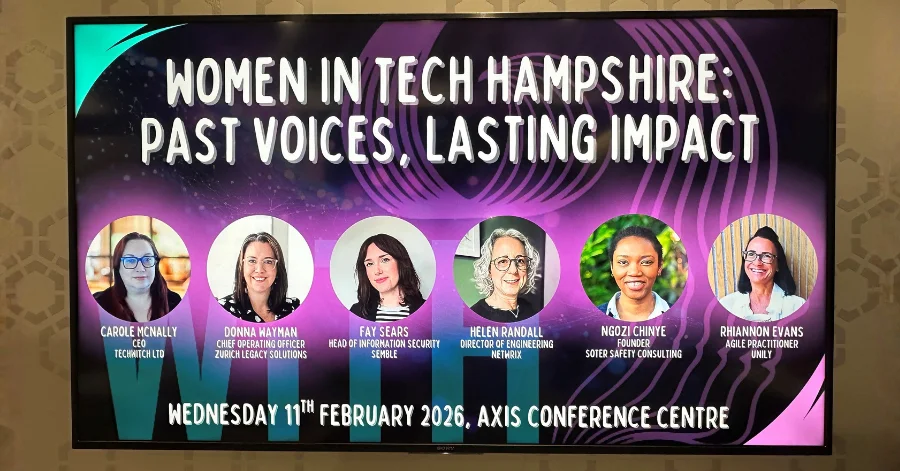
Women in Tech Hampshire is back for the new year, and we kicked off with an engaging and inspiring event, welcoming back some of our past speakers to share insights on our most popular topics.
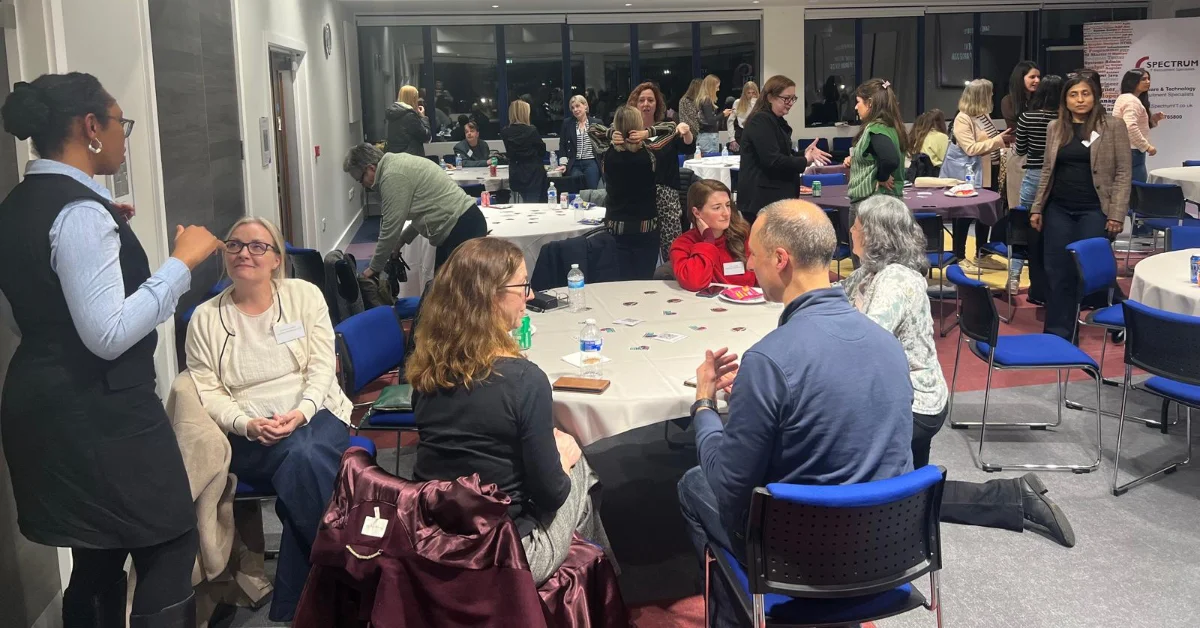
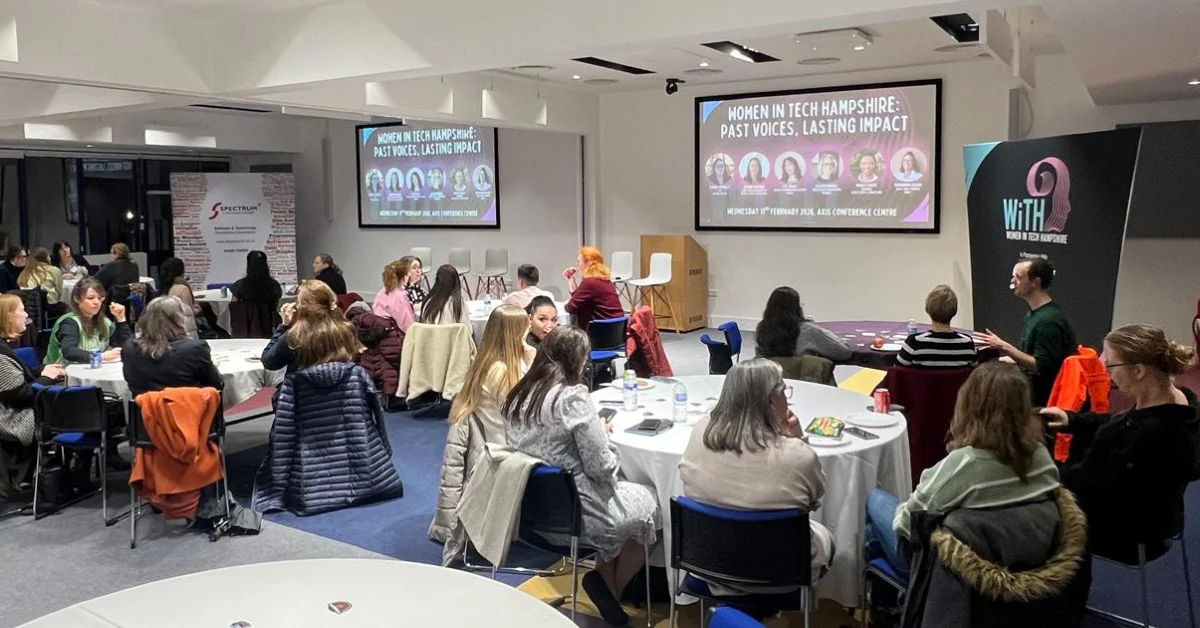
North of 70 people joined us in a fully open Q&A format across two panels, covering topics such as technical vs non-technical roles, neurodiversity in the tech space, the use of AI and building effective software teams. Blending personal experience with practical advice, all our panellists delivered honest and passionate insights in response to many thoughtful questions from our audience.
Panel 1 – Non-Technical Roles, Neurodiversity and Female Leadership
Leading our first panel was Carole McNally, Donna Wayman and Rhiannon Evans. They each discussed their own career pathways and explained how careers in tech are often non-linear.
Carole is the co-founder of a tech consultancy and works in conversational AI. Carole is autistic and was diagnosed with a brain tumour two years ago, which affects her memory. “My first thought wasn’t about me, it was: who looks after my children? Then I realised there are many children who need access to tech, not just mine.” Atypify is an innovative digital inclusion project working to make IT, tech and digital pathways accessible to neurodiverse women, girls and non-binary people. We asked her how she thought the industry had changed since last on the panel, particularly in relation to neurodiversity in the tech space. “It’s more open now, but often only as long as it doesn’t affect productivity,” she said.
Donna has worked in insurance for over 20 years from project management to regulatory change, data leadership and operations. She reflects that her career, and that of many others in the tech industry, evolve more like webs, with each move building capability in a different direction. She said that she’s noticed a shift over the last couple of years and she’s “not the only woman in the room anymore”, highlighting that at events (and not just women’s events) she’s seeing more diversity in speakers and the people attending.
Rhiannon describes herself as a “non-technical person in a technical space”, acting as a translator between business stakeholders and engineers through her work as a Delivery Manger in product and engineering. She said the biggest change for those in non-technical roles is understanding the impact of AI and technical data. “I used to say, ‘I’m not technical’ as a shield. Now I ask engineers about technical debt, about architecture trade‑offs. AI has forced me to upskill.”
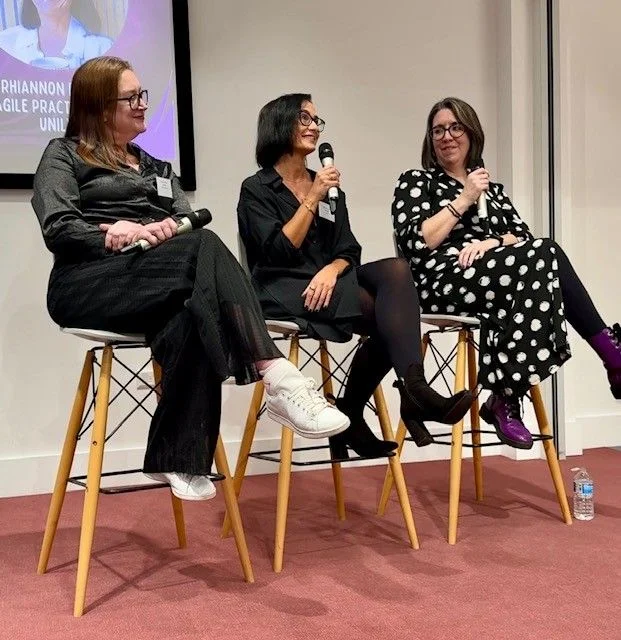
The panel discussed the importance of non-technical roles, reinforcing their value. Carole said that a lot of women previously avoided tech events because they didn’t do coding or weren’t developers – but, as she says, “you don’t have to code to be technical”. We asked the panel what would break if non-technical roles disappeared, to which Rhiannon replied: “I think prioritisation would break. Developers would still code, but that prioritisation piece that a non-technical person brings to the table to be able to understand what is actually a priority and what isn't would be missing.” Donna agreed that tech companies need those who act as translators, “people who connect governance, regulation, business need and engineering capability”.
Carole warned that we need to be careful about narrowly defining what ‘technical’ means, as it can discourage women and non-binary individuals from understanding the different routes and pathways into tech outside of coding. “They don't realise there are different avenues and lots of different job skills,” she clarified, pointing out that companies need communication skills, organisational skills and problem solving.
A member of our audience asked what the panel thought was best practice for neurodivergent voices to be heard. Carole emphasised the importance of representation and redefining how we communicate; every person with autism is different and not everyone communicates verbally, but this doesn’t mean they don’t have ideas and thoughts to bring to the table in other ways, e.g. through written communication. Organisations need to broaden what good communication skills looks like. “Don't let it just be constantly the loudest voice that gets heard… Give [neurodiverse people] that space and make it an open and safe space for everyone.”
Donna agreed and said there’s a need to educate senior leaders and understand the environment from a neurodiverse perspective. “Several neurodivergent people speak to our executive board… sharing how they operate and what you might expect from them… to come as they are and be who they are.”
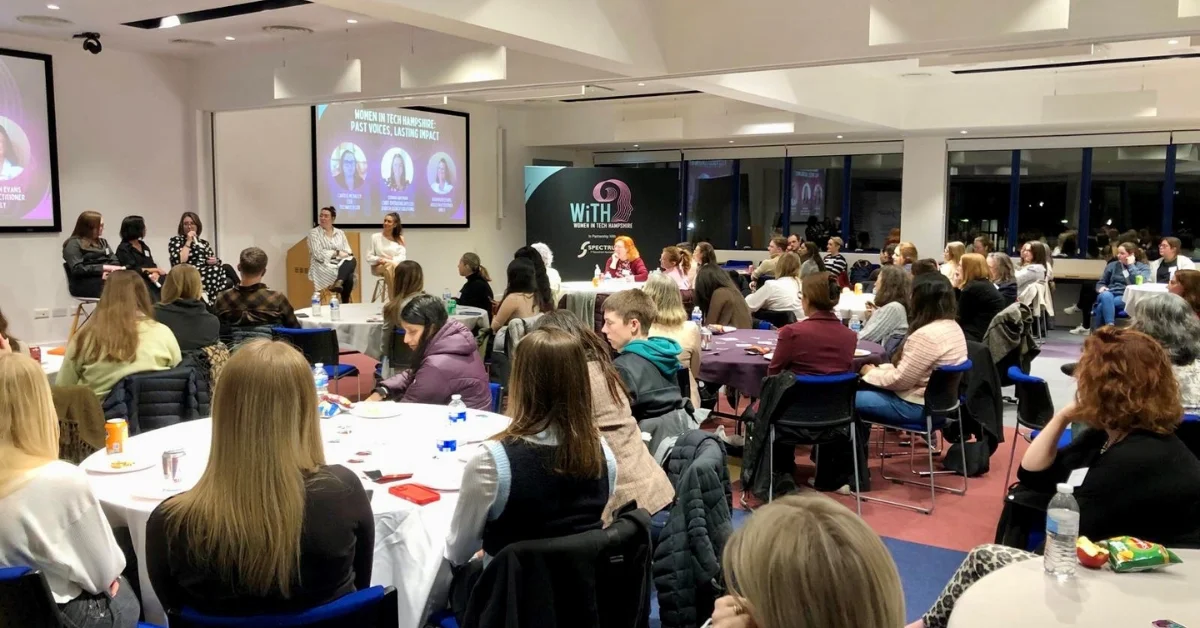
The conversation between the panel and audience moved on to discussing risk taking and psychological safety at work, with one attendee asking how the panel support their teams when there is risk involved. Rhiannon replied that it’s about creating a safe space for her team, letting them know it’s okay to go wrong. “Even if you're in what is a risk-advanced company, natural instincts are to protect ourselves. Leadership should do more to create that safe space.” Carole agreed that your teams need to know you have their back, stressing the importance of visible leadership support. The conversation also covered the importance of using neutral language and owning mistakes, taking responsibility and accountability.
Another question from the audience asked about adaptability, especially considering rapid technological change that might be altering the work environment, and how we can help our teams adapt to the tech we’re experiencing at the moment. Rhiannon answered that part of her role was to bring ‘calm to the chaos’, while meeting people where they are: “I think everybody is at different stages of their journey… I could be working with very senior developers, but they might not have the same interest in other things. Or a very junior developer feeling overwhelmed. Everything's moving so quickly.” She acknowledged that ‘change fatigue’ is a real thing, with people becoming tired of how fast things move, and referred back to the previous point about having safe spaces to experiment and learn.
Donna agreed that you have people with very different tolerances to changes in tech. Someone who might have been in a role for a long time can sometimes be more resistant to change, and that might need tackling in a different way. “It’s our understanding that one size does not fit all… and your techniques of taking people through [change] have got to be different depending on the generation or workforce.” She also thinks it’s important to foster a culture of lifelong learning and developing skills.
Panel 2 – Building Software Teams, Women in AI and Female Founders
With the room buzzing with conversation and ideas, we launched into our second panel of the evening. For this, we were joined by Fay Sears, Helen Randall and Ngozi Chinye.
Helen started as a Graduate Developer almost 30 years ago, spent about a decade coding and then moved into leadership roles. She set up an engineering operations function, standardising processes and implementing better ways of working across a group of acquired start-ups.
Ngozi, a Chemical Engineer, describes herself as “tech-adjacent”. She runs a consultancy helping start-ups in renewables and high-hazard industries manage safety risks as they scale. She built a software product for safety risk modelling despite having no prior software knowledge, learning through conversations and incremental decision-making.
Fay is a Head of Information Security at a health tech SaaS company. Her pathway was through IT and networking, then into cybersecurity. She loves the way security constantly changes and says that AI is changing it all again: “Security is moving towards AI governance and data ethics.”
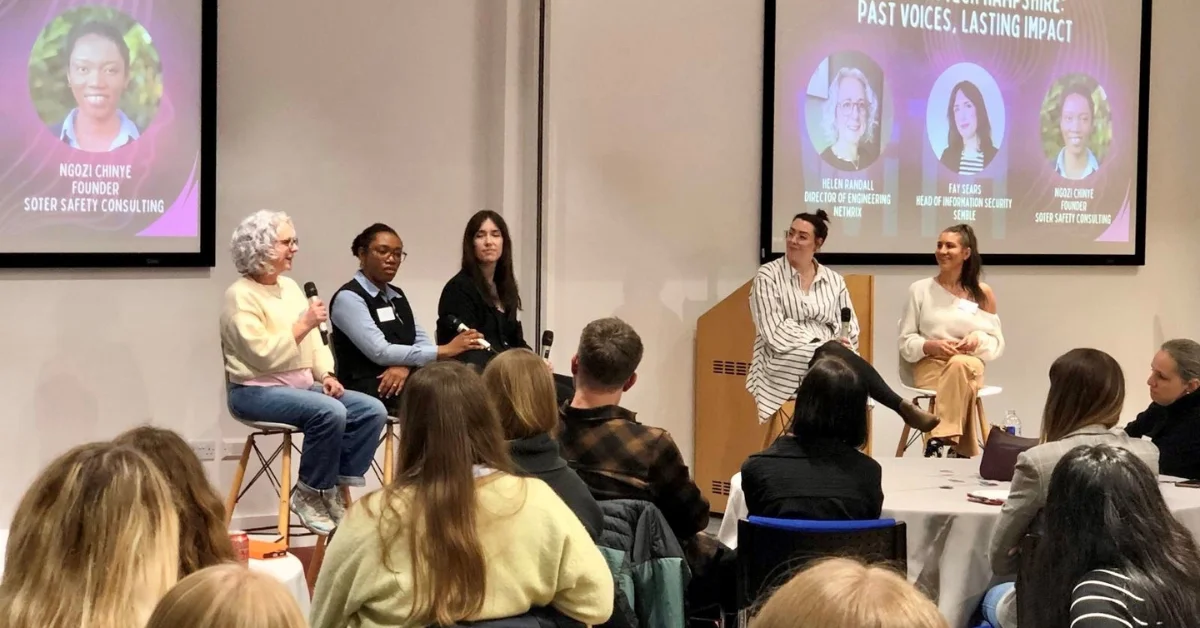
We wanted to know more about how our panellists thought the industry has changed to which Fay replied that is changing constantly. She described a cycle in which companies make mass tech layoffs due to the potential of AI, only to have to rehire when it doesn’t work out as they thought. She also said that there’s an element of ‘push-pull’ around new tech, referencing the EU AI Act, which has shifted after pushback from tech companies. She said that it’s the period of change that we don’t like, likening the situation to moving house – we know the end result of a new house is worth it, but the transition, the actual moving part, is a stressful and uncomfortable process.
Helen added that leadership often wants to use AI, but treats it like a new tool, rather than the big organisational and cultural shift that it is. Without proper planning, governance and clear purpose, adoption of AI creates confusion rather than progress. “I think so many people need to take a step back. Not to go slowly, but just take a step back and figure out ‘what are you trying to do?’”
We asked Helen what she thinks success looks like in software teams and what leadership can do to create the right conditions for it. She explained that it goes beyond just the basic success metrics (lead time, deployment frequency, performance data, etc). It’s also important to look at the people who show up and contribute, and to understand that numbers might not always be where you want them at that moment, but you have to consider where you’re at in terms of building something – it can take more time to create that quantitative success, but nurturing people to fully engage is important.
There are always challenges in the tech sector; we asked Ngozi how she handles challenge, given she came to software without coding experience and admits that she “didn’t know anything… All I knew was that I had an idea for a software product, but I had no idea at the start how to make that into something.” She began with conversations, explaining her ideas, gathering feedback and making small decisions step by step. Her risk benchmark was simple: ‘Will anyone die? Will I go bankrupt?’. If not, she would take the chance and move forward.
Following this, we wanted to know what could be done within the tech sector to support more female founders. Ngozi said that innovation can be very exclusive, concentrated within large corporations or academia. She said that smaller founders can struggle to get support, funding, access and opportunity. “I mean things like industry bodies that are supposed to promote innovation and diversity within the industry in the UK don’t have enough opportunities in place for anybody else, other than large, multicultural, multinational organisations and the top universities in the world to come up with the new ideas and the new products driving the industry forward”. An audience member asked if this was a UK or global problem, to which Ngozi replied that she suspects it’s a global problem, especially in risk-averse sectors where mistakes can be fatal, however “the conservatism stifles innovation about the definition of risk”.
The conversation moved onto the topic of AI, and one question from the audience asked whether the panellists would be willing to share how they had used it. Ngozi said she has only started using ChatGPT in the last six months, asking it for advice on a product’s direction and to refine her thoughts – bouncing ideas off the system, but not asking it to make any critical business decisions. Fay also uses it to bounce ideas: “I'll put: ‘This is what I'm doing. This is my approach. This is the context. Tell me what I’m missing? What are my blind spots here? What am I not considering?’ And sometimes it's spot on.” However, Fay strongly emphasised the value of human mentors, who can better understand context and share lived experience. Helen says that ChatGPT has helped her massively with her cognitive load, capturing her ideas, enabling her to explore them and summarising her thoughts.
Another audience member wanted to know about the panellists’ thoughts on AI governance. Fay talked about how AI governance frameworks are constantly evolving, and they can sometimes feel disconnected from practical implementation, especially without clear guidance. For Ngozi, working in a high-hazard industry, she stressed how important it is to have a clear audit trail and accountability on the human side for every decision made and whether AI was used to support that choice.
The final question from the audience asked the panellists how they deal with pressure when faced with a critical issue. Fay emphasised a need for self-awareness and knowing your own personal tolerance for stress. “We all handle stress and pressure in different ways, and if you can’t establish healthy coping mechanisms, trauma or stress-sensitive physical anxiety reactions, being in a role where that is a potential consequence is not worthwhile for a paycheck.” She also said that leaders need to prioritise appropriately and ensure pressure isn’t passed down to teams. Helen agreed that it’s important to check in with yourself and question whether your reactions are reasonable, and if not, can you do anything about it?
The whole evening was inspiring, motivating and engaging, and we’ve since had so much positive feedback on the conversations, takeaways and format.
Our next event will be on 15th April 2026, follow our Women in Tech Hampshire LinkedIn page to find out more and book your space.
Related Posts
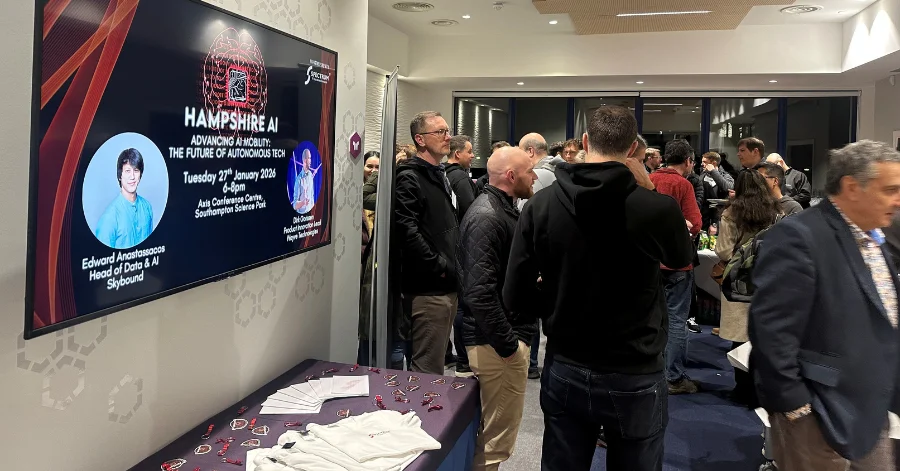
Hampshire AI January 2026 - Advancing AI Mobility
29 Jan, 2026
Tech Salaries: Planning for 2026
28 Jan, 2026