AI, Talent and Risk: A Leadership Breakfast with NatWest
05 Oct, 20265 minutes
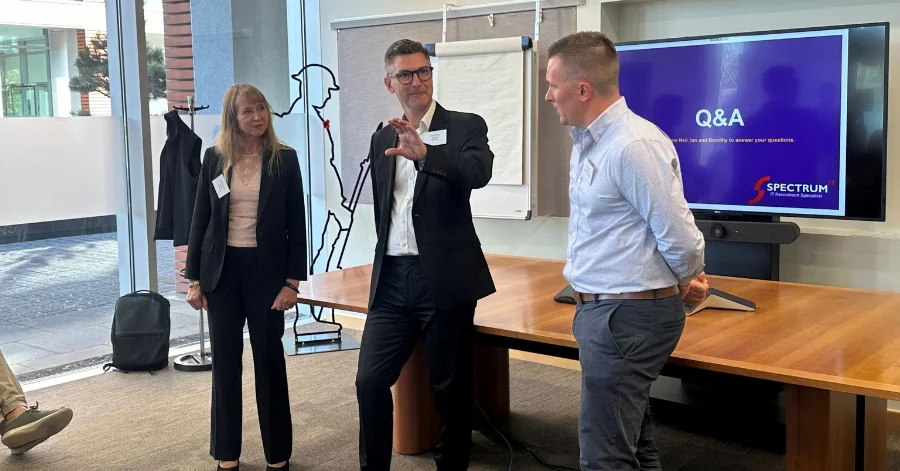
Spectrum IT Recruitment and NatWest brought business and technology leaders together to explore AI adoption, talent, business value and risk.
AI is no longer sitting at the edge of business strategy. For many organisations, the question has moved from should we use AI? to something much harder: where should we use it, what needs to change around it, and how do we know it is creating genuine value?
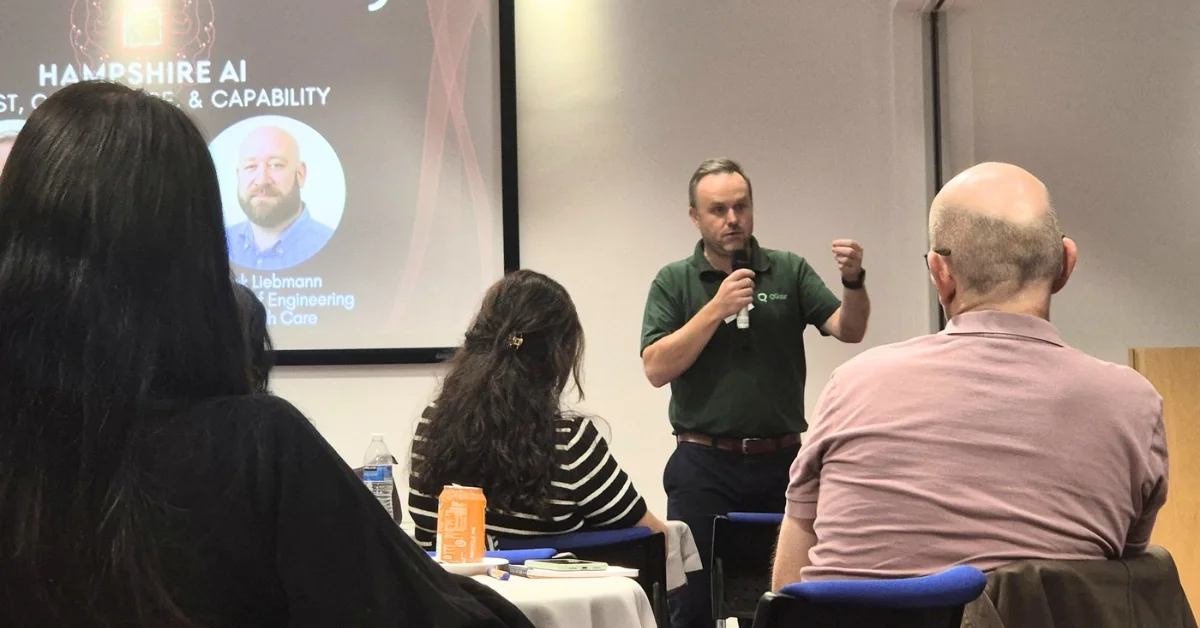
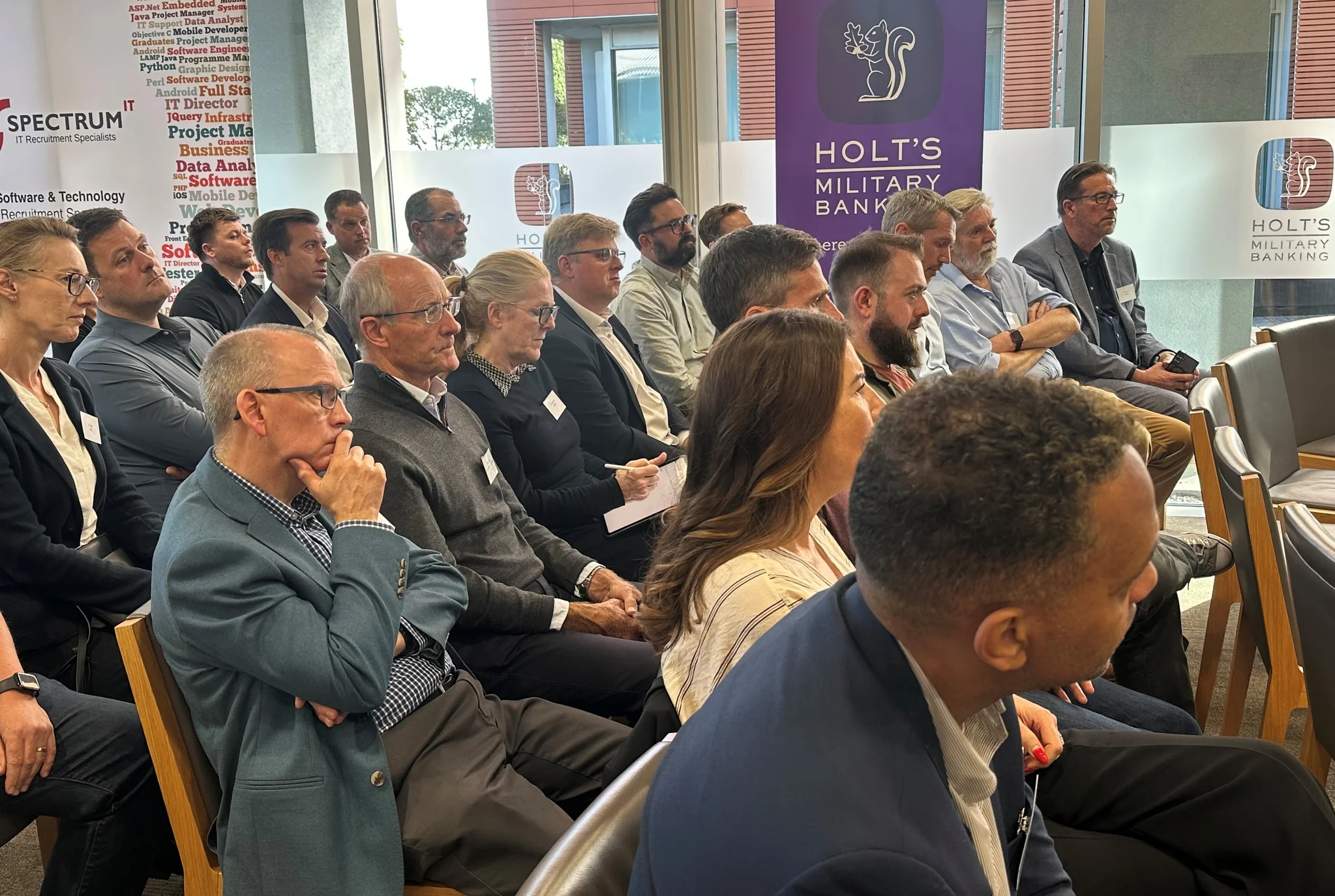
That was the focus of Future Ready: Tech, Talent & AI, a Technology Leadership Breakfast hosted by Spectrum IT Recruitment and NatWest in Farnborough. With a room full of business and technology leaders, Neil Bellamy from NatWest, Ian Taylor from Spectrum IT Recruitment and Dorothy Agnew from Broadfield Law approached the question from three different perspectives: business strategy, technology talent and legal risk.
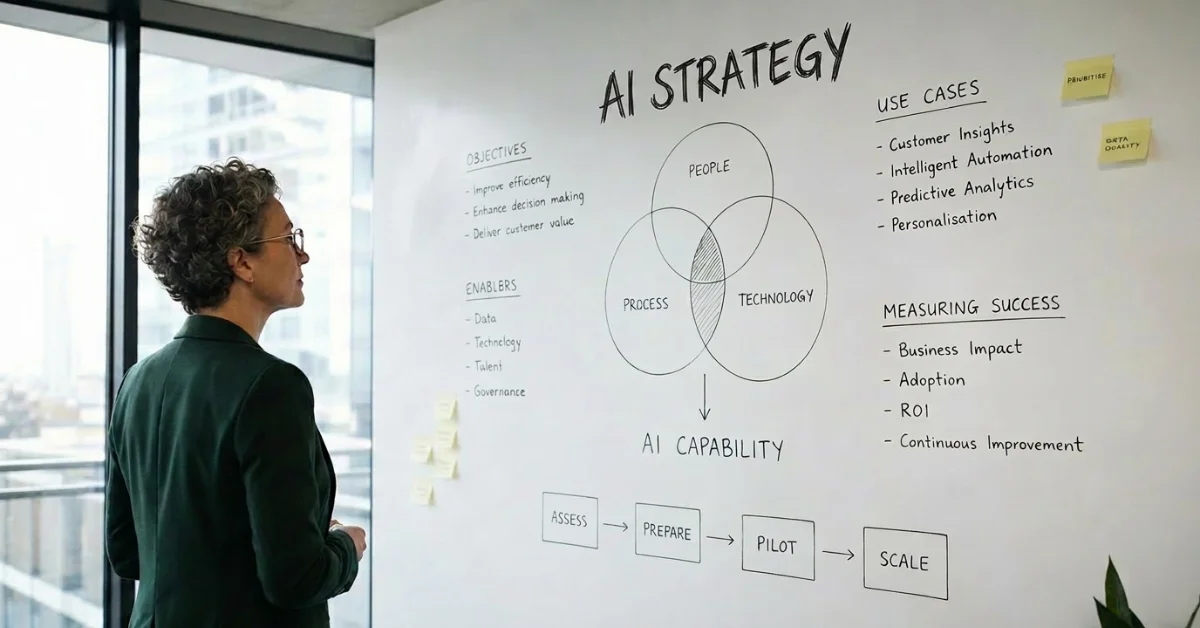
Across the morning, one theme kept resurfacing. Successful AI adoption is becoming less about the technology itself and increasingly about the decisions organisations make around it.
AI adoption is mainstream. AI maturity isn't
For technology leaders, simply having access to AI is becoming a poor measure of progress.
Neil Bellamy, National Sector Head, Technology, Media & Telecom Innovation at NatWest UK Corporate Coverage, shared research showing that 44% of businesses surveyed are already using AI, with another 41% planning to within five years. However, only 6% were categorised as transformational adopters.
The difference is not simply the number of tools being used.
As organisations become more mature, AI moves into regular operations and workflows. NatWest's research also showed an important difference in the benefits businesses report. Efficiency and innovation can appear relatively early, while profitability and revenue become much more prominent among transformational adopters.
For boards, that changes the conversation. Rather than asking which AI tools the business should buy, the more useful questions are where AI could change value, risk or competitive position, and which problems are genuinely worth solving.
As producing software gets easier, judgement becomes more valuable
The same shift is already changing technology teams.
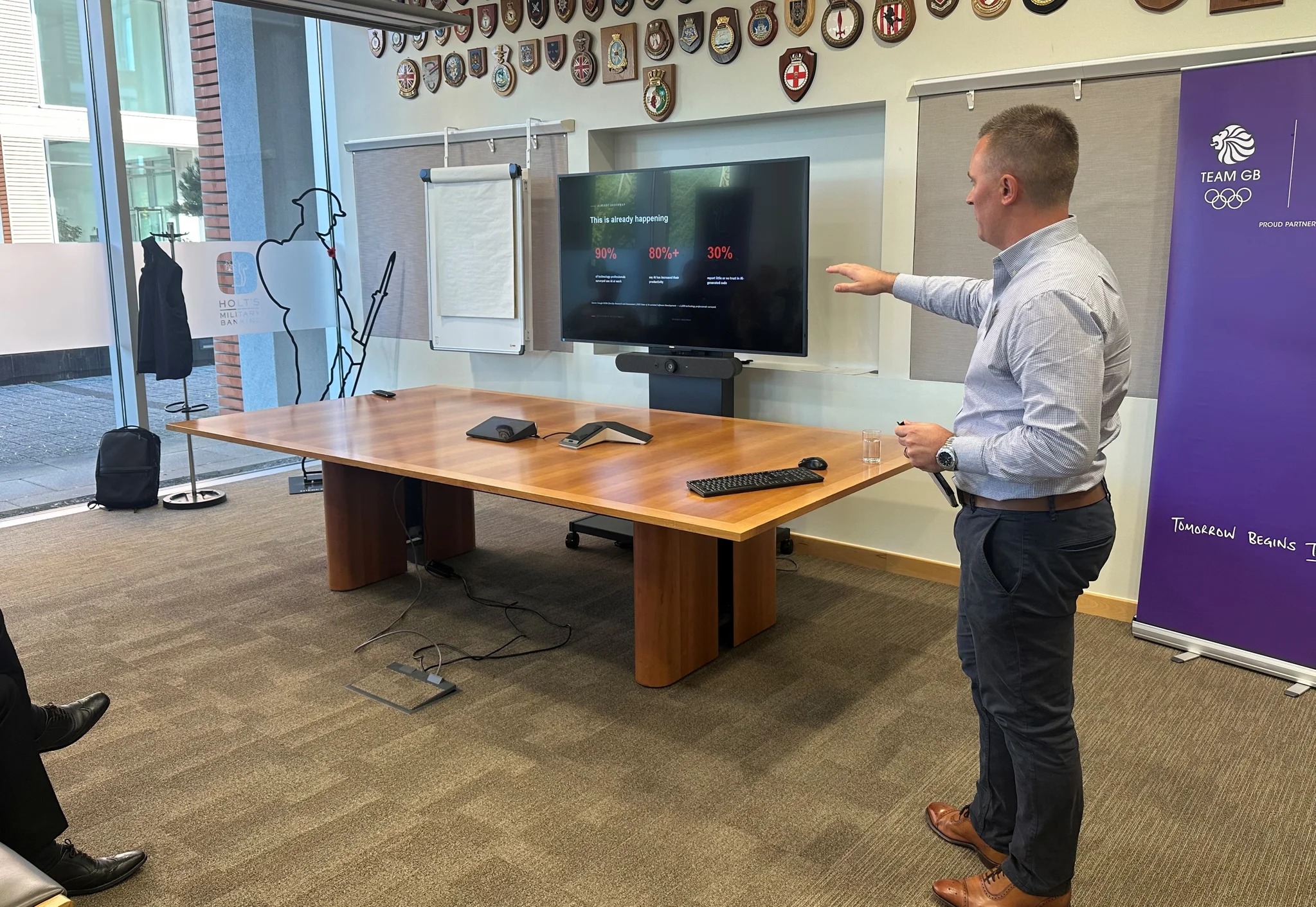
Ian Taylor, Director at Spectrum IT Recruitment, explored how AI is altering the shape of software development. Instead of viewing AI simply as a productivity tool for developers, organisations are beginning to rethink how teams themselves operate.
Traditional technology teams have often been built around defined roles and handovers between product, architecture, development, QA and DevOps. An AI-native model can look very different: smaller multidisciplinary teams, supported by AI agents and automation, taking responsibility for a much broader scope.
That does not necessarily mean technical expertise becomes less important. In many areas, the opposite may be true.
When AI can generate code, documentation and basic tests more easily, the human contribution moves further towards defining the problem, making architectural decisions, validating outputs, understanding security and risk, and deciding what should actually be built.
This creates a different measure of capability. Headcount alone tells us increasingly little about what a technology team can deliver.
The junior skills gap needs attention now
There is, however, a longer-term question hidden inside that productivity story.
If AI performs more of the routine tasks traditionally given to junior developers, where will tomorrow's experienced engineers gain their experience?
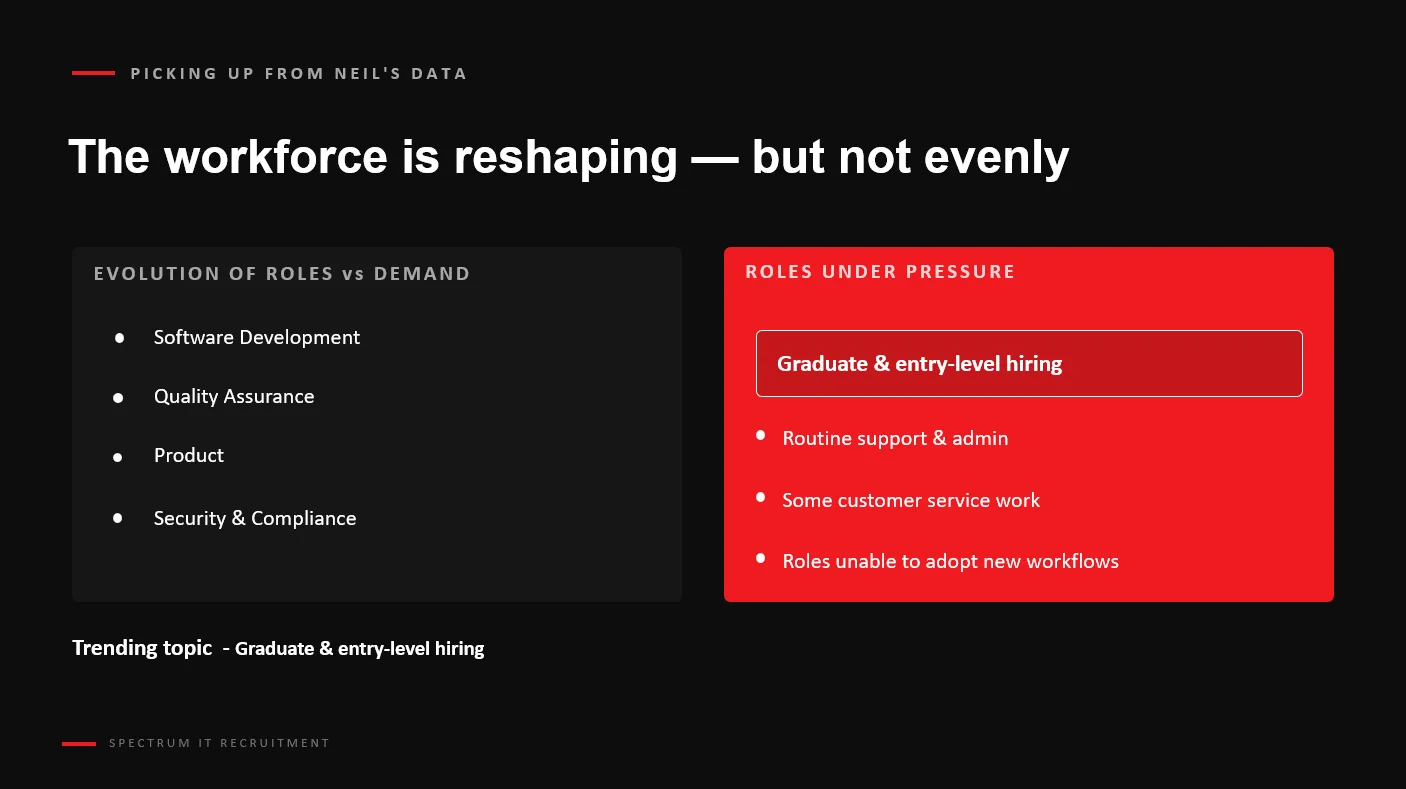
Ian described this as one of the biggest workforce questions facing technology businesses. Spectrum IT is already seeing significantly less demand for graduate and entry-level software hires, while demand has shifted towards experienced professionals capable of architecture, validation, security and higher-level decision-making.
The challenge is that today's senior engineers developed their judgement by doing the work that AI can increasingly perform.
It means organisations may need to become much more deliberate about development, giving junior professionals earlier exposure to customers and products, greater responsibility for real outcomes, opportunities to review AI-generated work, and stronger mentoring. These were among the possible approaches explored during the presentation.
The question is therefore not simply how AI changes today's workforce. It is whether the decisions organisations make today leave them with the skills they will need in three, five or ten years.
AI can make decisions. Responsibility still sits with people
Greater capability also brings greater responsibility.
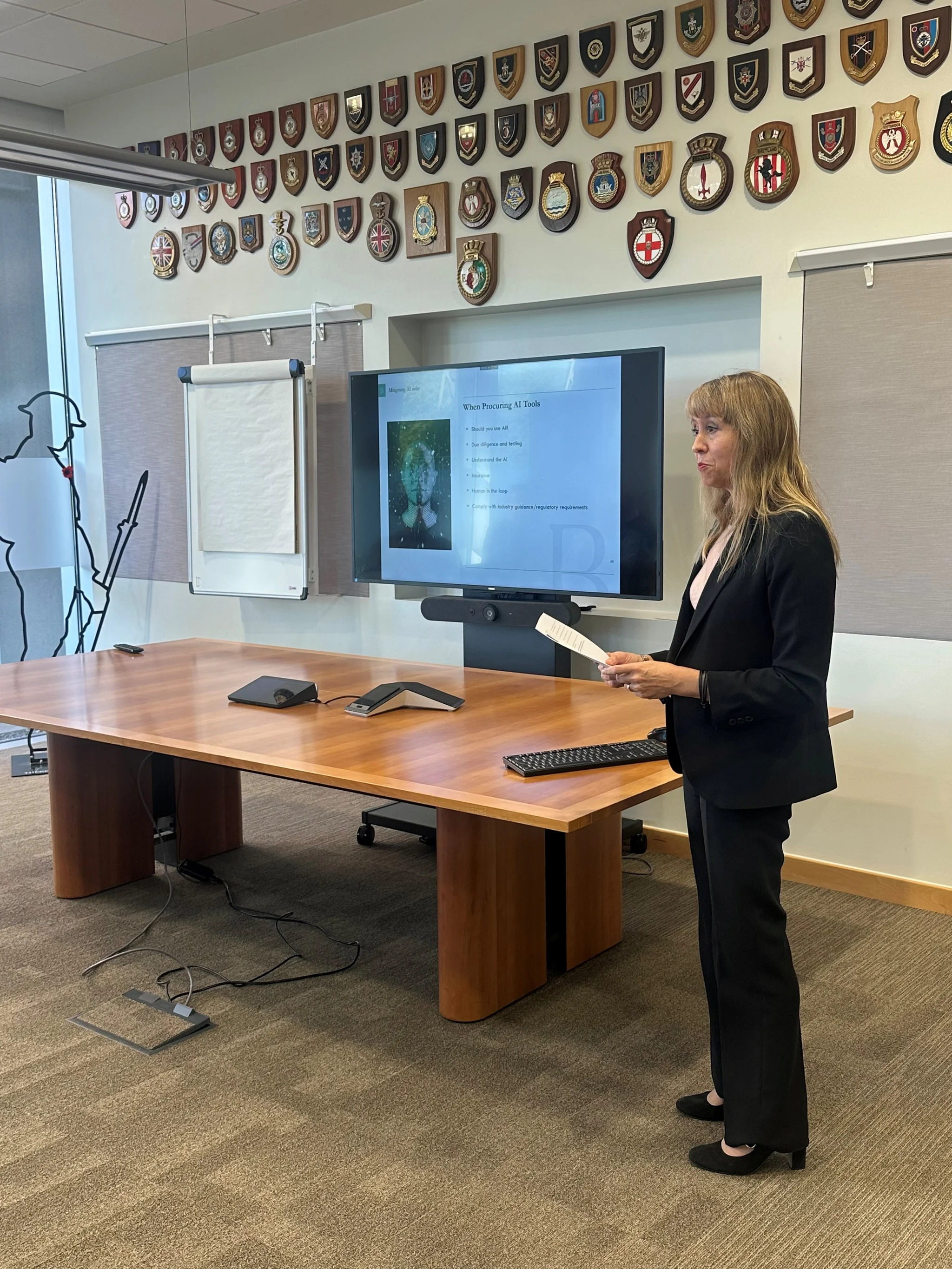
Dorothy Agnew, Legal Director at Broadfield Law, looked at what happens when AI gets things wrong, covering issues including negligence, discrimination, intellectual property and data protection.
One principle was particularly important: an AI system cannot carry legal responsibility itself. The business or individual supplying or deploying the system remains responsible for its use and outputs.
Dorothy used real cases to demonstrate why this matters, including Air Canada's experience with incorrect information provided through a chatbot and Ticketmaster's data protection case involving a third-party chatbot.
The practical message for businesses was not to avoid AI, but to build control around it.
That includes understanding how a system works, testing it, considering bias and data protection, retaining appropriate human oversight and being clear contractually about areas such as intellectual property, warranties, liability and what happens when something goes wrong.
It also leads to a deceptively simple question: does this process need AI at all?
What we heard from the room
That question was picked up immediately by the audience.
One attendee asked whether businesses risk jumping onto AI too quickly when a rules-based system or conventional automation could solve the problem more effectively. Neil agreed with the principle: businesses should start with the problem and the customer requirement, then identify the technology that best solves it, rather than buying AI and searching for a use case.
Another question explored outcome-based pricing. If AI allows suppliers to deliver the same outcome with fewer hours or people, should customers continue paying for seats and time?
The panel's answer suggested this is still very much a work in progress. Some areas, such as contact centres, lend themselves more naturally to measurable outcomes, but defining value and building contracts around it becomes much harder elsewhere. Procurement models may also need to catch up.
The discussion later moved to reliance on major international AI providers, including questions around data processing, APIs and sovereign AI. It was another reminder that AI strategy increasingly reaches beyond the technology team into procurement, legal, commercial strategy and the boardroom.
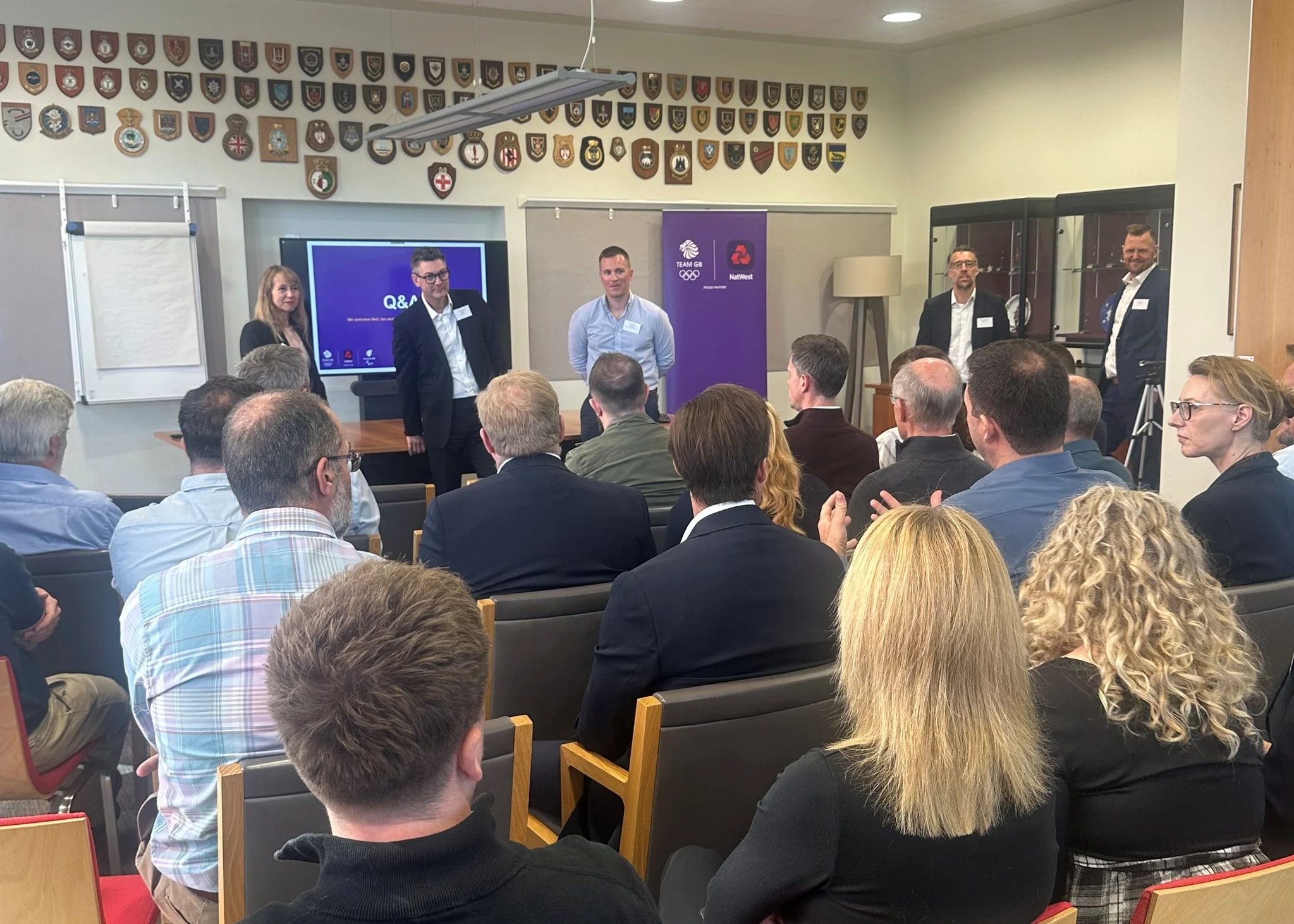
The morning started with AI adoption, but the discussion repeatedly came back to people, processes and decisions.
For technology leaders, the opportunity is significant. But buying more tools is unlikely to be enough.
Organisations need to understand where AI creates value, redesign work rather than simply automate individual tasks, protect the future skills pipeline and put governance around the systems they deploy.
Thank you to Neil Bellamy, Ian Taylor and Dorothy Agnew for sharing their perspectives, to NatWest for co-hosting the event with us, and to everyone who joined us and contributed to the discussion.
Perhaps the most useful question for a leadership team now is not “What are we doing with AI?”
It is “What are we trying to achieve, and how can AI help us get there?”