Hampshire AI June 2026 – AI & Data: Turning Insight into Impact
22 Jun, 20268 minutes
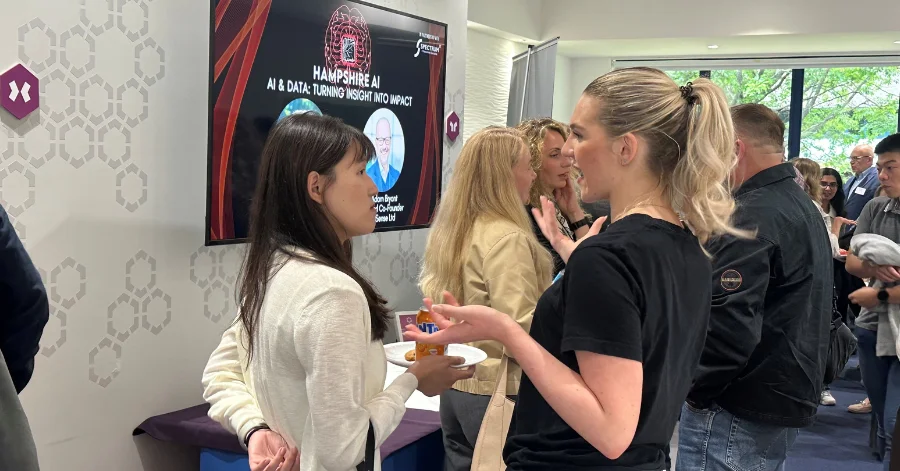
Each Hampshire AI event captures a different stage in the evolution of AI. This session felt particularly grounded in reality.
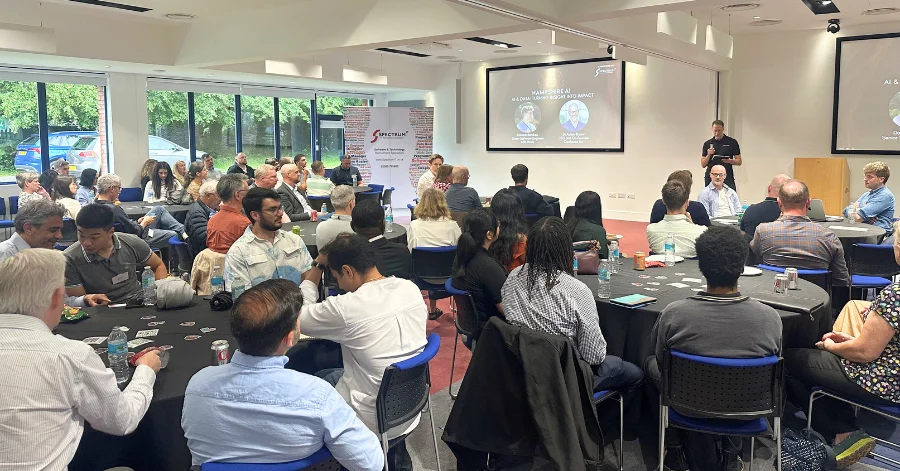
With just under 100 people in the room, the focus was not on hypothetical futures or distant possibilities. Instead, the evening explored how organisations are already using data and AI to solve real problems, improve decision-making and deliver measurable outcomes.
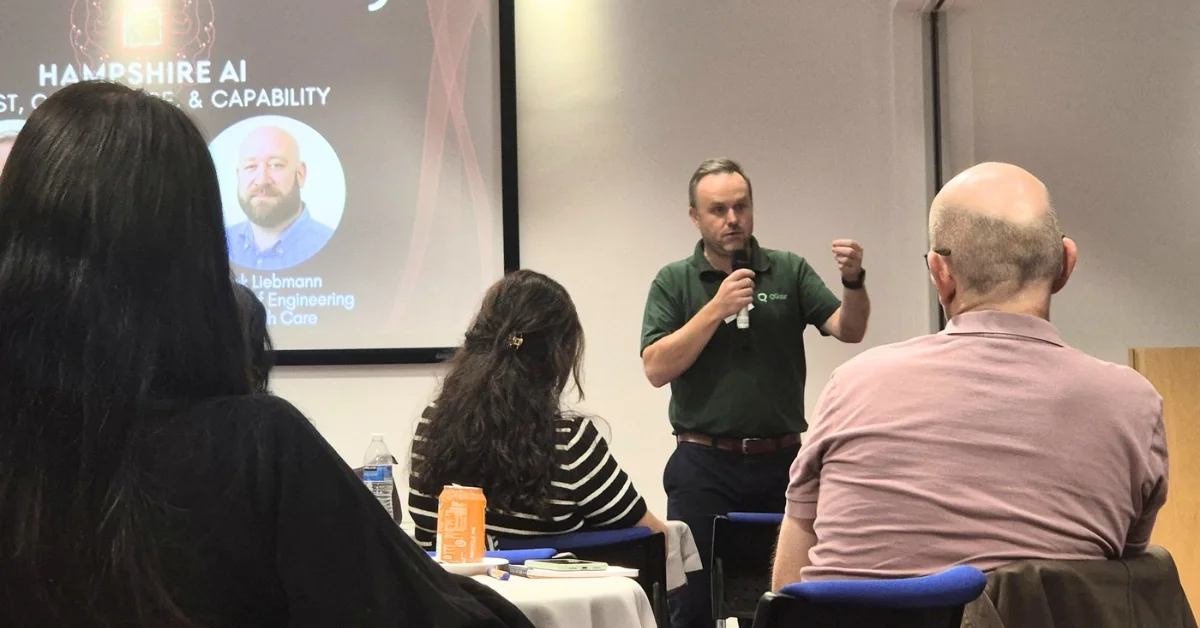
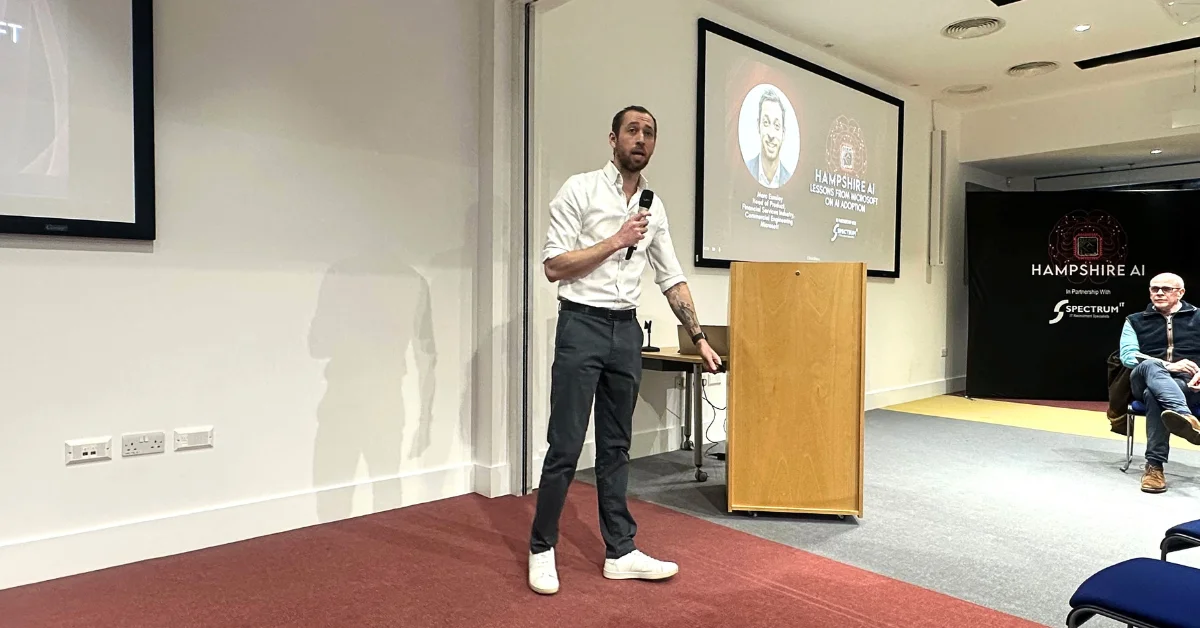
The theme was AI & Data: Turning Insight into Impact, and the two speakers approached that challenge from very different perspectives. Damian Bemben, Senior Software Engineer at AdaMode, opened the evening by exploring the practical application of AI in critical industries, while Dr Adam Bryant, CEO and Co-Founder of CanSense, demonstrated how AI is helping tackle one of healthcare's most significant challenges: the earlier detection of cancer.
Although the use cases could hardly have been more different, both presentations pointed towards a similar conclusion. The value of AI is rarely found in the technology alone. It comes from combining data, expertise and trust to support better decisions.
From Data to Decisions: Damian's View of Applied AI
Damian began by stepping back and examining how AI has evolved over recent decades.
From early machine learning systems through to deep learning, large language models and autonomous agents, the story of AI is often presented as a story of increasingly powerful technology. Damian offered a more practical perspective. Much of this progress has been driven by access to more data, more computing power and richer context.
Throughout his presentation, the focus remained firmly on how AI is being applied in the real world, particularly in highly regulated and safety-critical environments.
Drawing on AdaMode's work within the civil nuclear sector, Damian shared examples of how AI can help organisations monitor complex systems, identify unusual behaviour and support operational decision-making. In these environments, the goal is not to replace experts, but to help them spot patterns that might otherwise go unnoticed.
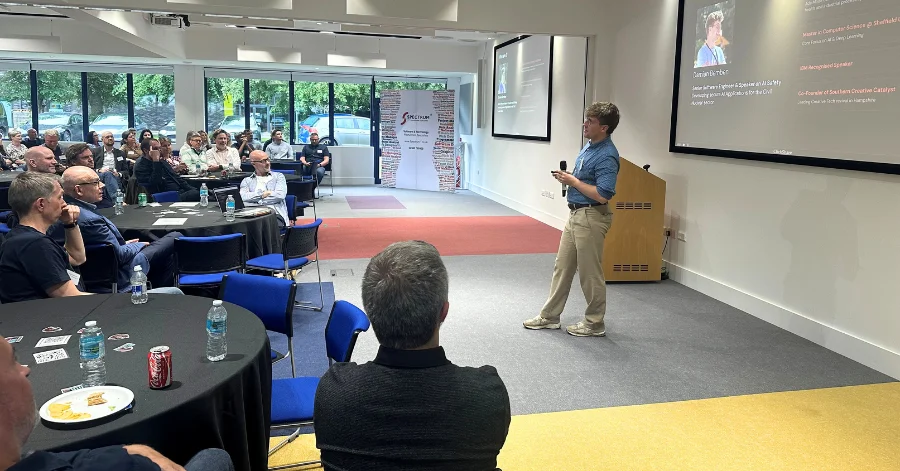
One example centred on predictive maintenance and anomaly detection. Rather than waiting for equipment to fail, AI systems can monitor large volumes of operational data and identify early warning signs that indicate something may be changing.
This sparked discussion around how these systems are trained. One attendee asked whether anomaly detection requires large amounts of labelled failure data. Damian explained that in many industrial environments, genuine failures are rare, making traditional supervised approaches difficult. Instead, systems are often trained to understand what normal behaviour looks like and then identify deviations from that baseline.
It was a useful reminder that some of the most valuable AI applications are not necessarily the most visible. They are often quietly helping organisations make better decisions before problems emerge.
Beyond Large Language Models
The conversation then moved towards the current generation of AI systems and the rapid rise of large language models.
Damian explored both their strengths and limitations, highlighting how models have become increasingly capable at generating content, summarising information and interacting with complex datasets. At the same time, he stressed that these systems still have weaknesses, particularly around reliability, hallucinations and explainability.
This sparked an interesting discussion around whether current approaches are beginning to reach their practical limits.
Rather than suggesting that innovation is slowing, Damian explained that improvements are becoming increasingly expensive from a computational perspective. Each new generation of models requires significantly more resources to achieve incremental gains.
The conversation also touched on about where AI development is heading next.
World models, simulation environments and physics-based approaches featured heavily in the discussion. Rather than simply predicting the next word in a sequence, these systems aim to build a richer understanding of how environments behave and evolve. While still developing, they represent an exciting area of research that could help address some of the limitations of current architectures.
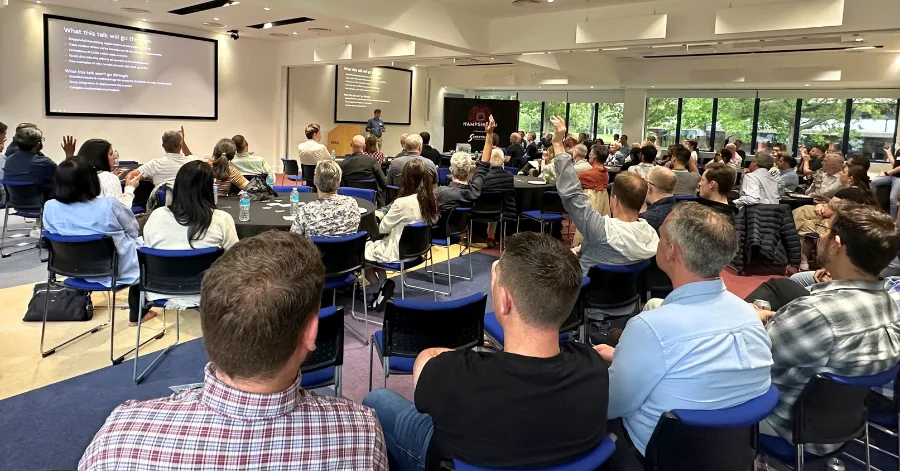
Alongside these technical developments, Damian also explored the growing role of AI agents. As systems become capable of interacting with tools, files and business processes, the conversation shifts from capability to responsibility.
Questions around governance, security and oversight became increasingly important throughout the discussion. As AI systems become more autonomous, ensuring they remain safe, transparent and controllable becomes just as important as improving their performance.
Turning Blood Samples into Earlier Diagnoses
The second half of the evening shifted from industrial systems to healthcare.
Dr Adam Bryant shared the story behind CanSense and the motivation for developing new approaches to cancer detection. (add in phrase from presentation – change the ending).
Drawing on his own experience of receiving a cancer diagnosis after a lengthy investigation process, Adam highlighted the importance of identifying cancers as early as possible. The statistics are striking. Survival rates for bowel cancer are dramatically higher when diagnosed in its earliest stages, yet many patients continue to be diagnosed much later when treatment options become more limited.
The challenge is not a lack of clinical expertise. It is the difficulty of identifying those patients who need further investigation quickly and accurately.
CanSense's solution combines Raman spectroscopy with machine learning to analyse blood samples and identify molecular patterns associated with cancer. Rather than relying solely on invasive diagnostic procedures, the technology aims to provide clinicians with an additional tool to support decision-making and help identify patients who require further investigation sooner.
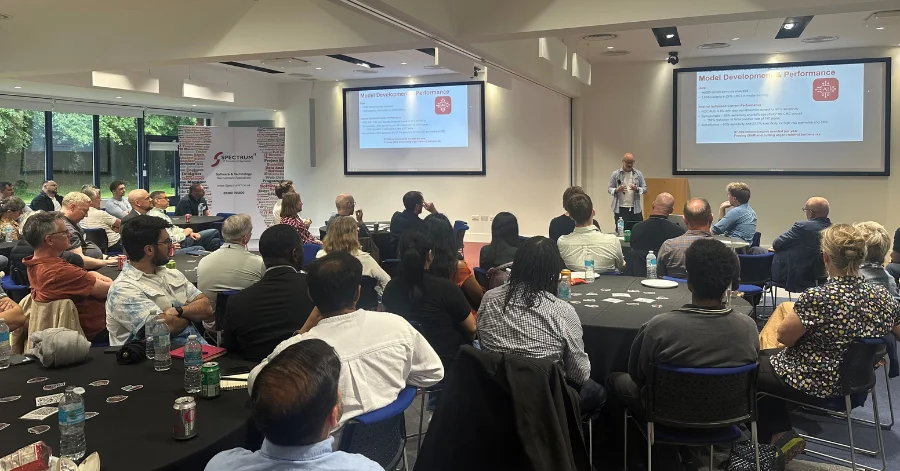
What stood out throughout Adam's presentation was the emphasis on practicality.
The objective is not to build the most sophisticated AI model possible. The objective is to create a system that clinicians can trust, regulators can approve and healthcare providers can deploy at scale, to help deliver better outcomes for both patients and healthcare providers.
Trust, Explainability and Clinical Responsibility
As with Damian's presentation, the discussion quickly moved beyond the technology itself and into questions of accountability.
If an AI system contributes to a clinical decision, who is ultimately responsible?
Adam explained that healthcare places particularly high demands on explainability and trust. Clinicians need confidence in the outputs they receive, and regulators need clear evidence that systems are performing safely and consistently.
This often means that simpler and more interpretable models can be preferable to more complex alternatives.
Another topic explored during the evening was the balance between early detection and overdiagnosis. If screening becomes increasingly sensitive, how do organisations avoid creating unnecessary anxiety or additional pressure on healthcare systems?
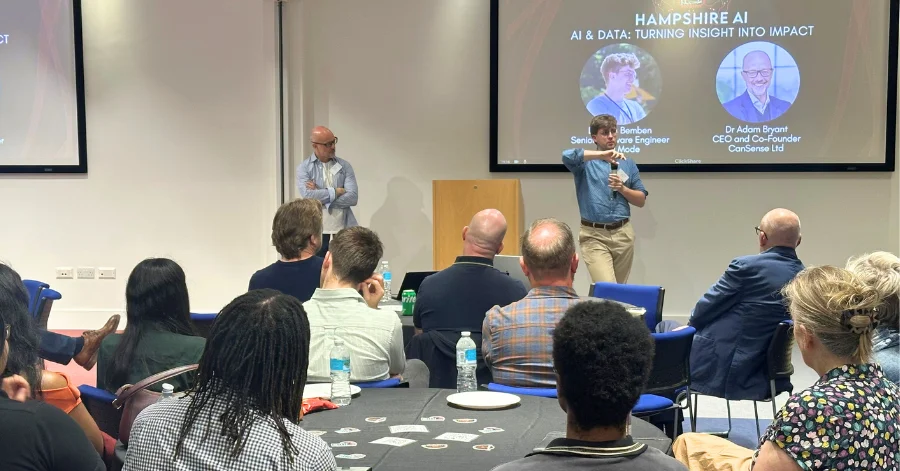
Adam acknowledged that this is a genuine challenge. The goal is not simply to detect more abnormalities. It is to identify the right patients at the right time and improve outcomes in a meaningful way.
This balance between sensitivity, specificity and clinical usefulness remains central to the development of healthcare AI.
A Shared Theme: Human Expertise Still Matters
Despite operating in very different sectors, both presentations arrived at a similar point. Neither speaker described AI as a replacement for human expertise.
Whether supporting engineers responsible for critical infrastructure or clinicians responsible for patient care, AI works best when it augments human judgement rather than attempting to replace it.
Data provides insight. AI helps identify patterns. People remain responsible for understanding context, making decisions and accepting accountability. This theme appeared repeatedly throughout the evening, both in the presentations and in the audience discussion.
Turning Insight into Impact
What made this Hampshire AI event particularly interesting was the contrast between the two speakers.
One focused on industrial environments where safety, reliability and governance are paramount. The other explored healthcare, where earlier diagnosis can have a direct impact on patient outcomes. Yet both demonstrated the same principle.
The challenge is rarely collecting data. Most organisations already have more data than they know what to do with. The real challenge is turning that information into something useful, trustworthy and actionable.
A huge thank you to Damian Bemben, Dr Adam Bryant and everyone who joined us for another Hampshire AI event. The quality of the questions, discussion and engagement helped turn two excellent presentations into a genuinely thought-provoking evening.
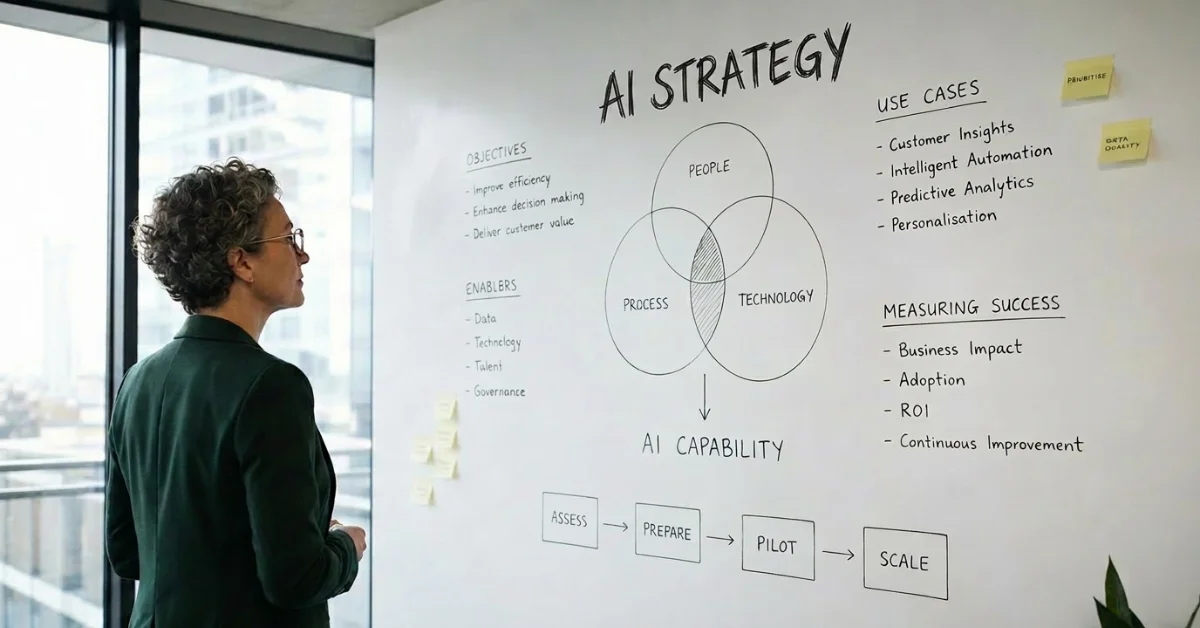
More than anything, the event reinforced that successful AI adoption is not simply about building better models. It is about understanding problems, applying technology thoughtfully and creating outcomes that make a meaningful difference.