Be Unapologetically You - Interview with Lauren James and Amy Lee, Co-Founders of Women in Tech Hampshire
18 Aug, 20267 minutes
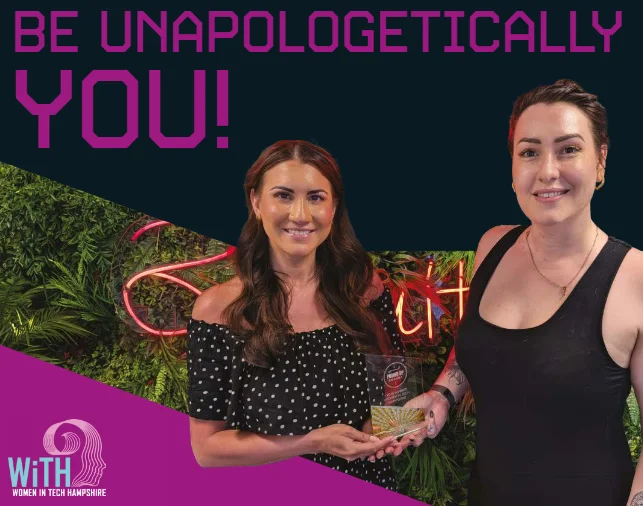
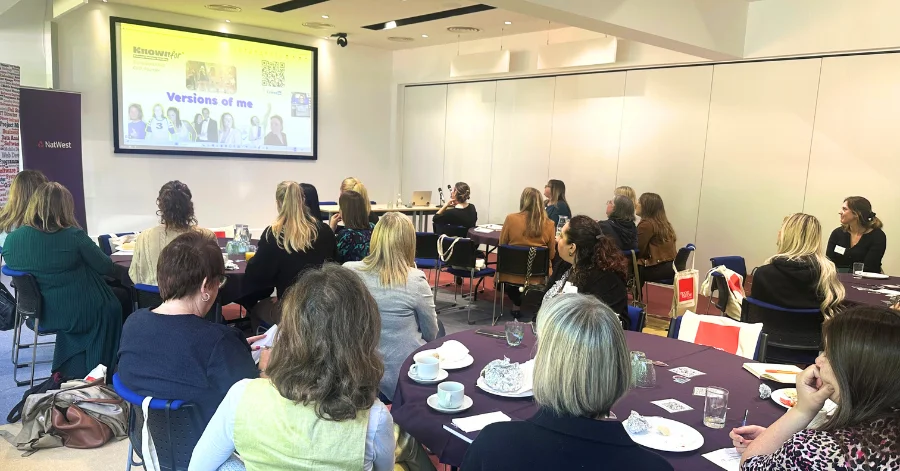
Lauren and Amy were delighted to be featured in the University of Southampton Science Park magazine recently, and grateful for the opportunity to share more about Women in Tech Hampshire. They sat down with Vanessa Gardner to talk about why they started the group and what they’ve learnt along the way, as well as what’s still broken for women in tech, what needs to change, and what businesses can practically do to make a difference. Here is the full article:
Women in Tech Hampshire (WiTH) was founded and continues to be run by Spectrum IT Recruitment to encourage diversity in the tech space. It was the brainwave of Lauren James and Amy Lee who were united by a passion for empowering women in technology to achieve their potential. The group is now a thriving network of over 1,200 female professionals and growing organically. Here, they explain why changing the system, not women, is paramount.
Let’s start with the big picture. In your view, what is still broken for women in the tech industry today?
Amy: Regardless of age, skills, backgrounds or privileges, clear themes come out of WiTH events as to why there is under-representation of women in the sector. The 2025 Lovelace Report called this out, highlighting how many women in tech reach a certain level and then leave because there’s no clear career progression or genuine approach to flexible working.
Lauren: Authentic commitment is a big issue. Women should be hired because they’re the best person for the job, not to meet a diversity quota. And it’s so important to follow through on what is promised when hiring - family-friendly policies, for example. If you don’t, women are often unable to stay and progress in their roles, and there’s an economic cost to that for all businesses. There’s not enough understanding of what women need to thrive in tech but we also appreciate that you can’t expect someone to spot an issue unless they’ve experienced it personally.
Systemically, what needs to change to overcome these challenges?
Lauren: This is a two-sided issue which needs to be tackled both at home when young and in later life at work. The dream gap is well-evidenced: often by around age five, girls stop seeing engineering and tech roles as options because they’re not exposed to them. This isn’t just about upbringing; it’s about what they see, access to mentors, and cultural micro-exposures that build over time. Positive role models and visibility of careers in technology are needed while brains are still developing.
Amy: In the workplace, there must be a recognition of conscious and unconscious bias, but you’ll only recognise it if you have been exposed to it or are given the opportunity to learn about it. We also strongly encourage allyship. So, even if you’re not the target of a bias but you witnessed it, stand up in that moment. People always regret the things they don’t say more than the things they do.
What trends are you seeing in how women are entering and advancing in technology roles?
Lauren: AI is already creating some interesting dynamics. Everyone must start embracing AI or the skills gap will continue to widen. The reality is that AI is only as good as the person using it, and that’s where many of women’s strengths become so valuable. Critical thinking, context, and empathy all play a key role in getting the best out of AI.
More broadly, the tech industry is increasingly recognising the importance of non-technical skills. While technical expertise remains essential, successful teams also rely on communication, project management, stakeholder engagement, and leadership. As technology becomes more embedded in every part of a business, these skills are becoming just as important as technical capability, creating more opportunities for people from different backgrounds and helping to challenge traditional perceptions of what a career in tech looks like.
Thinking about when you created WiTH: was there a specific moment that made you think, this needs to happen (and we’re going to be the ones to do it!)?
Amy: Lauren and I have worked together for over 10 years and have become friends inside and outside work, so we know the challenges we’ve each faced in our careers. Personally, moving from healthcare recruitment (which has mostly female candidates) to tech recruitment (which has mostly male candidates) was a real culture shock. I remember thinking: where are all the women in this sector?!
Lauren: We’d seen the great work that Women in Tech Dorset were doing and soon realised that there was nothing comparable in Hampshire. That’s when we decided to build something and give Hampshire women a platform. We pitched the idea to our director (Ian Cruickshank) and he was all-in straight away, immediately seeing benefits for the whole industry. Since then, our whole team has been incredibly supportive. WiTH is a passion project, and something we love running as part of Spectrum IT. It’s authentic and we’re doing it for the right reasons.
Winning the Best Diversity Network at the SheCanCode Power Up Awards was recognition of this. What else does success for WiTH look like?
Amy: Providing a platform and human connection. Through meeting others, we know that some WiTH members have started their own business or taken new jobs because they’ve learned to value what they bring to their work. They’ve realised that they do belong in tech.
Lauren: Creating genuine actionable impact. If someone attends one of our events, learns about the problem, hears about solutions and goes back to work to make a difference, then we’re having an impact.
What challenges have you faced in gaining traction for the group?
Amy: Encouraging more men to attend our events is the biggest hurdle. We want to stress that backing women doesn’t take anything away from men. We want change to happen, but how can we expect male colleagues to be better team players and leaders if they don’t understand a woman’s reality? We know that, for a man, coming to a WiTH event is unknown territory. They worry that they won’t feel welcome and it’s not a safe space for them. That’s how many women feel in the technology sector. That’s the point.
Lauren: It makes me sad that many women don’t know about the group or assume it’s not for them because they don’t have a ‘tech’ job title. Many women are quick to put themselves down. “I just” is a phrase I hear a lot from women who may not be on the leadership team but nevertheless, are critical to their company’s success as a project manager or software engineer for example. Whatever your role, WiTH is for you.
Do WiTH events feel different to other networks that you’ve been involved with, and if so, how?
Amy: We’re consciously not hierarchical. It’s organic; our topics and events are shaped by the community as we hear about their pain points.
Lauren: Yes, we are definitely less corporate and more educational. Appropriate times and locations for our face-to-face events matter, so as many people as possible can attend, but we always share write-ups for those who can’t make it.
What one practical thing could a tech business owner do right now for current and future female colleagues?
Amy: Listen. Just listen to everything. Assume nothing. If you make assumptions, you won’t learn because you don’t have the facts. Have difficult conversations without being defensive. Be creative and open.
And, if there was a single piece of advice you could give a woman working in the sector?
Lauren: We would really struggle to give just one piece of advice, so here are five pieces of advice! Join a community or build a network. Trust your abilities, you deserve to be at the table. Have confidence and be your biggest cheerleader. Take up space. Be unapologetically you!
Related Posts
Women Driving Innovation - Roundtable Breakfast
08 Jun, 2026