Spectrum IT Insights
Trends, data, and developments in IT and Tech Recruitment
Spectrum IT's 2025 Tech Hiring Insights
Our 2025 roundup of key trends shaping tech hiring into 2026
2025 Tech hiring at a glance:
- A year of cautious confidence and more considered hiring decisions
- Strong demand for senior, specialist and transformation-led roles
- Fewer junior opportunities, increasing long-term pipeline risk
- Stable salaries and rates, with continued premiums for niche skills
- AI adoption accelerating, alongside growing focus on governance and compliance
AI and automation are embedded in everyday businesses, driving demand for skilled tech professionals. As adoption accelerates, organisations are taking a more considered approach to how these technologies are implemented, with increased focus on responsibility, sustainability, governance and compliance.
Drawing on Spectrum IT’s data, market expertise and wider industry research, our 2025 Roundup highlights the key shifts in UK tech hiring supply and demand, the evolving structure of the tech workforce, and the challenges and opportunities shaping the market. We explore what these changes mean for employers and candidates as they plan hiring strategies for 2026.

What's shaping the UK tech hiring market
2025 has been a shift from prolonged post-pandemic volatility to tentative growth across the UK tech market. Ongoing economic uncertainty and global pressures continued to influence hiring decisions, but sentiment improved as the year progressed. Employers started 2025 cautiously, with confidence strengthening from mid-year as budgets stabilised and signs of recovery became clearer, though with a continued emphasis on cost control.
This improving confidence has translated into renewed, but selective, investment in technology and talent. Digital transformation programmes have restarted following two years of constraint, driven by Cloud modernisation, AI integration and cybersecurity priorities. At Spectrum IT we’ve seen AI move from experimentation into everyday workflows, particularly in software development, testing, quality assurance and productivity tasks, shaping hiring decisions towards experienced, impact-driven roles.
‘Throughout 2025, we’ve seen a cautious optimism from employers with transformation-led hiring and an increase in senior capability’ Ian Cruickshank (Managing Director, Spectrum IT Recruitment)

Supply and Demand Trends
Where demand is strongest
Demand in 2025 has been focused on senior, specialist and transformation-led roles, in the UK and globally. At Spectrum IT, we recorded the highest demand for senior roles in 17 years, including a significant year-on-year increase in Senior Software Engineer and Tech Lead vacancies, reflecting employers’ preference for experienced hires who can deliver impact quickly in a more cautious market. This shift has also been accompanied by rising baseline requirements, including AI awareness as a core capability rather than a specialist skill.
Hiring has been concentrated on roles that deliver immediate business impact, particularly across:
- Data, analytics and governance, reflecting growing regulatory and compliance requirements
- Product and change roles, including Product Owners, Business Analysts and Transformation Managers, supporting complex transformation programmes
- Highly skilled contractors such as Full Stack Developers, used to accelerate delivery and provide flexibility in uncertain conditions
This trend aligns with APSCO’s Hiring Trends Report (Nov 2025), which reported a clear increase in contract vacancies as organisations seek agility while managing risk.
AI literacy is now widely expected as a baseline requirement, especially for senior hires, as organisations embed automation across workflows rather than isolated pilots. The growing cyber risk has also increased demand for experienced security and governance professionals, alongside board-level leaders with technical oversight to manage both external threats and internal risks.
Signs of pipeline risk in junior hiring
While demand for senior roles remains strong, there are clear signs of structural imbalances in the market. Traditional software engineering roles are declining (NFER), influenced by AI-assisted development and a more globalised remote workforce that is widening the talent pool.
More significantly, 2025 has seen a continued decline in junior tech hiring. This trend has been building since 2022 and reflects a shift in how organisations structure teams while they adapt to new technologies and tighter budgets. Based on our LinkedIn polls conducted by Spectrum IT in December 2025, capturing responses from several hundred tech professionals and hiring leaders across the UK, 49% of respondents were making fewer junior hires or none at all in the past year, while 34% said they had increased junior recruitment.
This imbalance presents long-term risks for employers. An ongoing lack of entry-level hiring narrows talent pipelines, limits internal progression, and increases dependency on external senior hires (often at a higher cost). Over time, this can contribute to future skills shortages and salary inflation at the top end of the market. The impact is particularly felt by recent graduates, despite Computer Science and AI being among the most in-demand university courses in the UK (BritAcademic).

Talent supply pressures
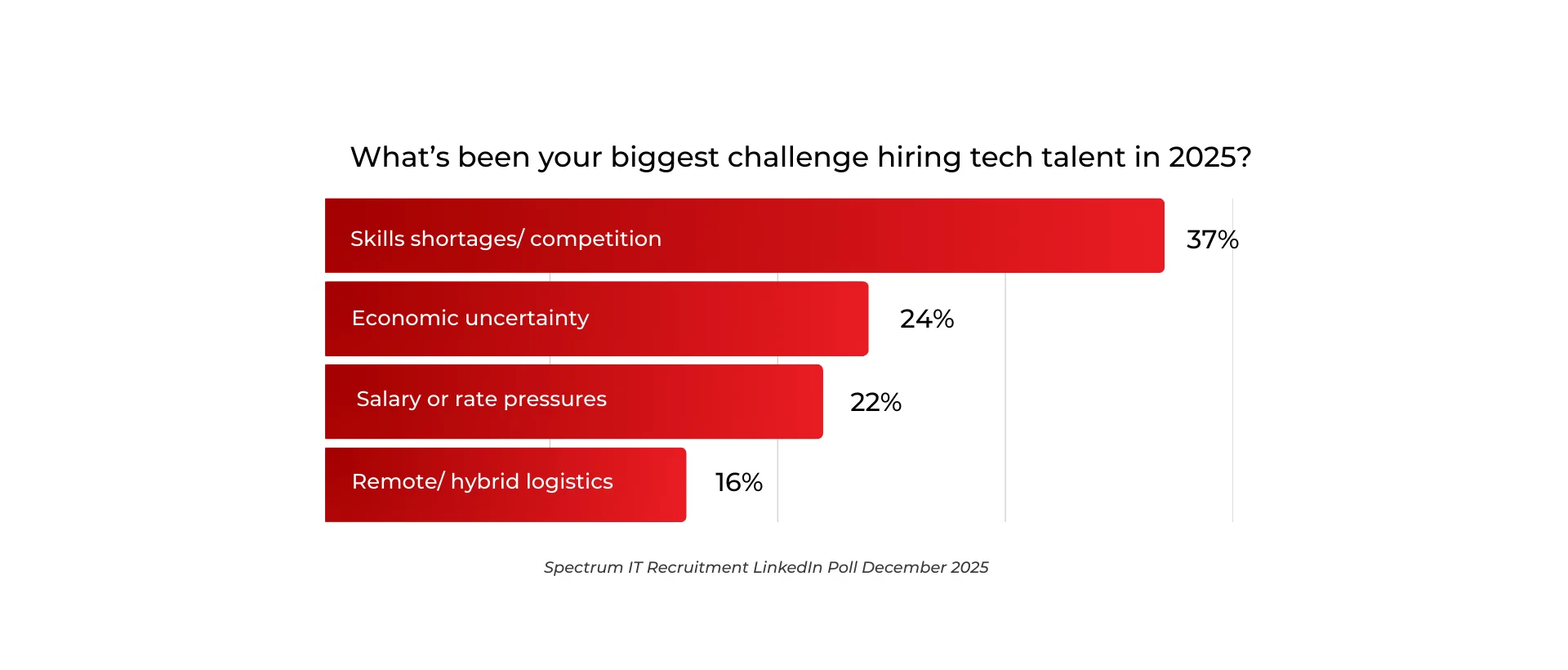
Skills shortages continue to limit access to experienced tech talent, particularly in specialist and high-demand areas. Competition for skills remains intense across industries, with many organisations struggling to secure the expertise needed to deliver transformation initiatives. In our own poll, 37% of respondents identified skills shortages and competition as their biggest challenge to hiring tech talent in 2025, followed by economic uncertainty (24%).
Beyond skills availability, candidate expectations continue to shape the talent pool. Competitive salary demands remain a factor, particularly for niche roles, but flexibility has become increasingly influential. In our poll, 22% of respondents said salary pressure was their biggest hiring challenge, while for 16% it was the logistics of remote and hybrid working.
From a candidate perspective, flexibility has overtaken salary as the leading motivator for job moves in 2025. In our poll, 36% of tech professionals cited remote or hybrid working as their main reason for changing roles, compared with 34% who prioritised pay. This represents a big change from our 2024 Insights, where salary was the dominant driver, and reflects a market where pay has stabilised and quality of life considerations carry greater weight.
Salaries and Rates
Tech salaries in 2025 have remained mostly stable, with some increases reflecting renewed but cautious confidence across the market. Permanent salaries rose between 3% and 8% over the year, with higher premiums for senior specialist roles, particularly in AI, cybersecurity and data.
External research supports this picture of steady, targeted growth. The CompTIA State of the Tech Workforce UK 2025 report found median tech wages to be 52% higher than the UK average, while HR Review reported that tech workers were among those most likely to receive pay increases, especially in AI, data and software development roles.
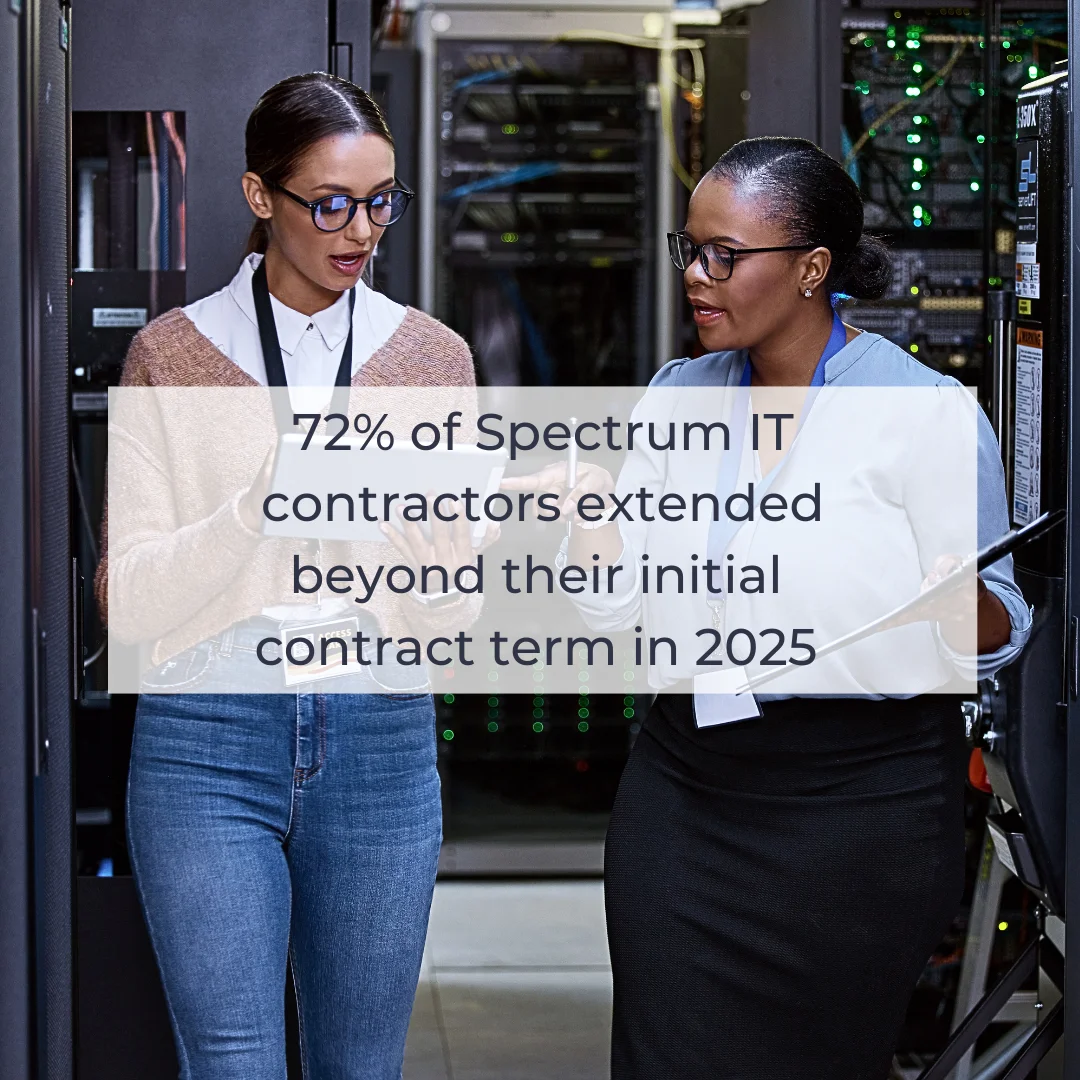
Contractor day rates and availability have also remained stable, with demand for flexibility and continuity rather than short-term cost saving. At Spectrum IT, 72% of contractors extended beyond their initial contract term in 2025, reflecting a preference for sustained delivery and reduced hiring risk.
Our poll reinforces this trend, with 29% of respondents reporting slight or significant increases in tech salaries or contractor day rates during 2025, while 30% said rates had remained unchanged. Beyond base pay, employers are increasingly using total reward packages to attract and retain talent. Flexible working, training and development budgets, and wellbeing benefits have become key levers where salary movement is limited.
Workforce Hiring and Structure Trends
Compared with previous years, hiring in 2025 has been more deliberate and selective. Organisations have shifted from headcount growth to capability optimisation, prioritising the right skills and experience over rapid expansion. Ian Cruickshank, Managing Director says “Contract hiring has been stable while permanent hiring has increased, with hiring managers taking a more considered approach to securing the right fit”.
Blended teams and hybrid models
Hybrid workforce models are now the norm. Blended teams combining in-house, contract and outsourced resources are being used to:
- Balance continuity with access to specialist skills
- Maintain delivery momentum without long-term headcount growth
- Increase resilience in an uncertain economic environment
This more selective approach to hiring has also increased focus on demonstrable skills, certifications and experience, rather than formal degree requirements alone.
Team consolidation over expansion
We asked our community what the biggest changes were in their tech teams in 2025, with 50% citing reductions or redundancies. Around a fifth said that teams had remained the same, and only 14% reported expansion. This indicates a continued focus on restructuring and optimisation rather than broader growth.
Collaboration between in-house talent teams and specialist recruiters has increased, particularly for niche roles or during peak demand, and is being used more strategically to improve hiring outcomes and candidate experience.

Contract hiring and IR35
On the contract side, IR35 continues to influence hiring decisions. Rather than reducing contractor use, organisations are becoming more informed and intentional in how they engage flexible talent. Contractors often help drive long-term success, which makes an efficient hiring process and speed to hire critical factors in securing high-quality talent.
The Impact of AI
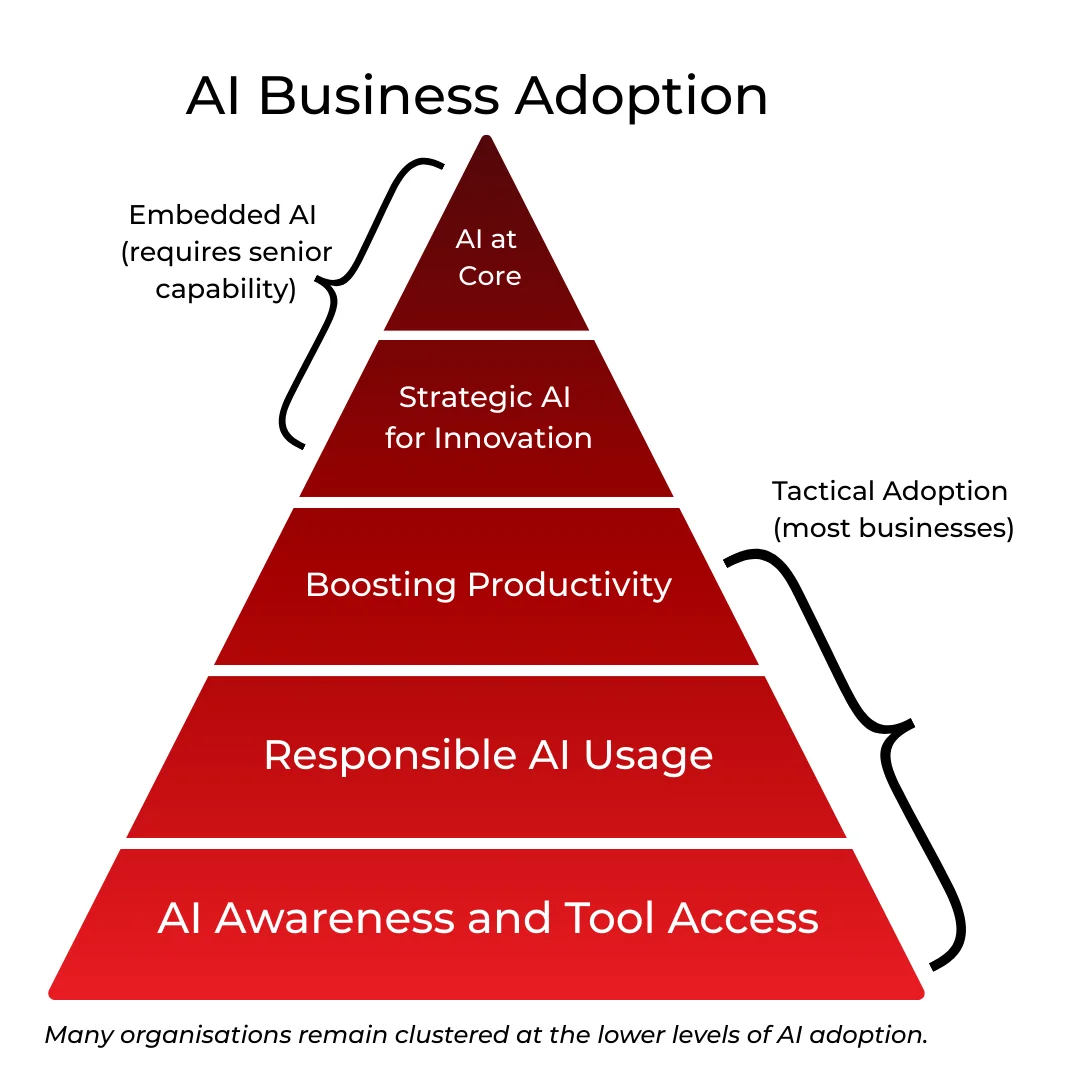
In 2025, we’ve seen a growing gap between AI experimentation and responsible, well-governed adoption. As one CTO-level technology strategist in our Hampshire AI group noted, many organisations have “minimal adoption, but massive consequences”, where AI strategy lacks clear ownership, structure and practical direction.
From our community insight, two patterns have emerged. Some organisations are deploying AI tools without fully understanding the implications for data protection, governance and compliance. Others are building AI capability in-house without sufficient focus on security, audit readiness and long-term risk. In both cases, the issue is not adoption itself, but a lack of strategy and appropriate guardrails.
These maturity gaps are already influencing how organisations design teams and make hiring decisions. Rather than building larger teams, many are using AI to augment existing capability, driving demand for smaller, more senior, AI-literate teams, often supported by specialist contractors.
In our Spectrum IT and Hampshire AI polls, only 10% reported no AI adoption in 2025, while adoption was higher among digitally mature organisations. This aligns with wider research showing 35% of UK SMEs are now actively using AI, highlighting a shift from experimentation towards embedded use.
These challenges have been a central theme at our Hampshire AI events throughout the year, with focused discussions on mitigating legal and brand safety risks, accountable AI, and the distinction between AI and automation.
Implications for hiring
As a result, uncertainty around AI implementation is influencing hiring decisions, with organisations increasingly favouring experienced, AI-literate hires, while tighter budgets and task automation have reduced trainee, graduate and apprentice opportunities.
While this approach may deliver short-term efficiency, a sustained reduction in junior hiring risks limiting innovation, weakening knowledge transfer and creating future skills gaps. Organisations that balance AI capability with talent development will be better positioned for long-term growth.
Challenges and Opportunities
Rebuilding the talent pipeline
If low levels of junior hiring persist, businesses risk creating a future senior skills gap. While AI-driven efficiency may reduce short-term demand for entry-level roles, a lack of structured talent pipelines threatens long-term growth, innovation and knowledge transfer.
There is a clear opportunity for organisations to invest in reskilling, internal development and alternative entry pathways, placing greater value on skills, certifications and real-world experience over formal degrees alone. Employers that balance AI-enabled productivity with long-term talent development will be better positioned to sustain capability and reduce future hiring risk.
Regulation, governance and compliance pressures
Looking ahead to 2026, regulatory change will increasingly shape hiring and workforce strategies. Organisations will need to plan for:
- New rules affecting umbrella companies and agency labour supply chains from April 2026
- The phased enforcement of the EU AI Act, impacting UK companies selling AI-enabled products into the EU
- Changes to the UK Skilled Worker route, which may increase costs and further constrain the available talent pool
As AI adoption accelerates, demand will grow for professionals who can operate confidently across compliance, governance and risk, alongside technical delivery.
Emerging and evolving roles
Demand is expected to remain strong for cloud and DevOps professionals as organisations continue to modernise infrastructure. Alongside this, several roles are likely to gain prominence in 2026, including:
- Cybersecurity architecture, driven by rising cyber threats
- ModelOps and AI governance roles, focused on lifecycle management and risk
- ESG-related technology roles, as sustainability moves from a compliance requirement to a performance driver
These roles reflect a broader shift towards responsible, scalable and well-governed technology adoption.
Expanding the talent pool and hiring models
Despite ongoing constraints, organisations have opportunities to widen access to talent through remote and hybrid working and more inclusive hiring practices. Hiring processes are also evolving, with AI and automation increasingly used to support sourcing, screening, and candidate engagement.
While automation can improve efficiency, candidate experience remains critical. The majority of candidates say they welcome AI in hiring when it improves communication and speed, but human interaction, culture and connection remain key differentiators.

Community Engagement and Regional Leadership

Women in Tech Hampshire wins SheCanCode Best Diversity Network

Hampshire AI celebrates its first anniversary since launching

Confirmed as Headline Sponsor for South Coast Tech & Innovation Awards
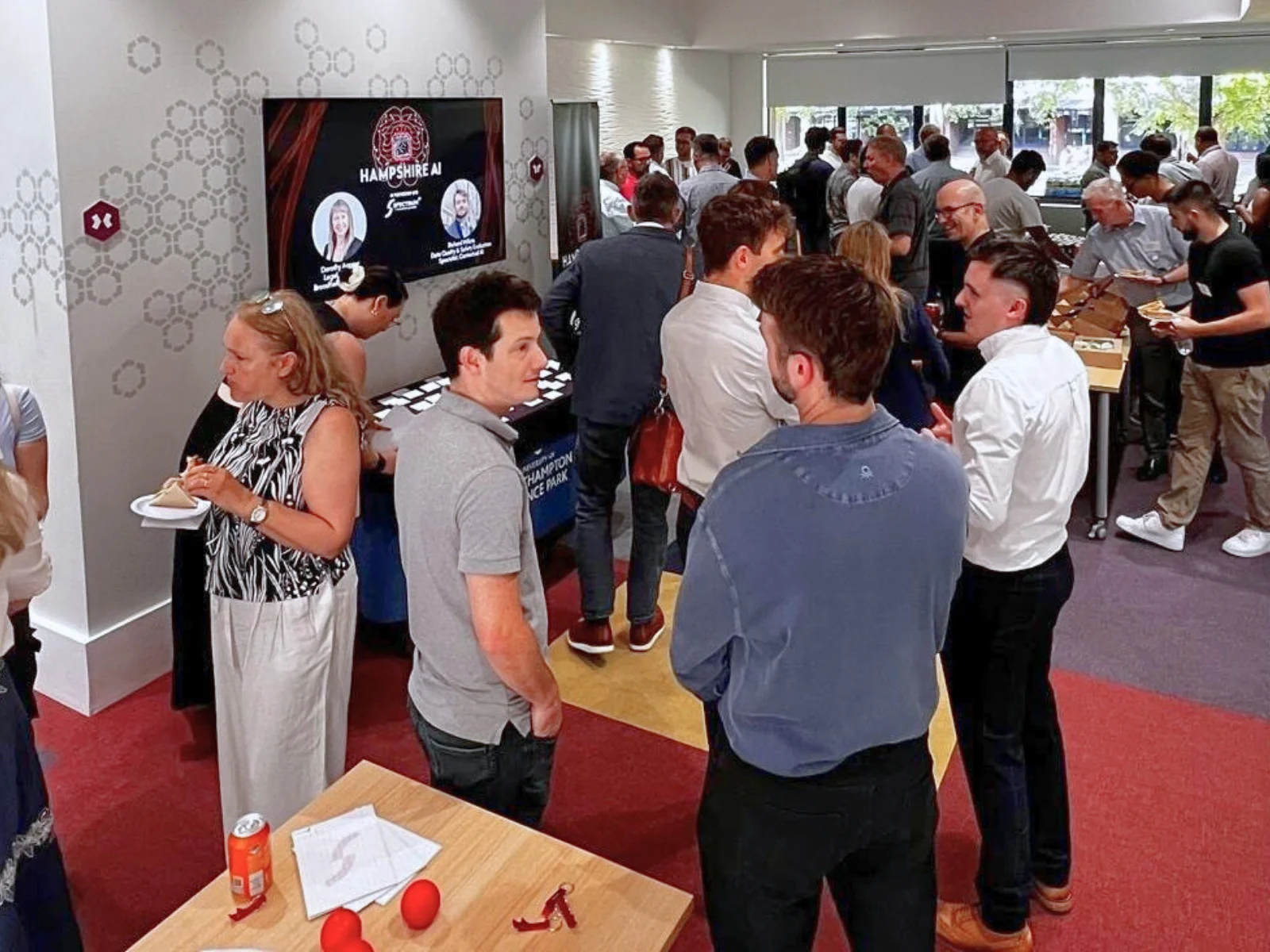
As hiring becomes more selective and remote work more widespread, the importance of strong regional tech communities has continued to grow. Throughout 2025, our in-person meetups have played a key role in supporting collaboration, knowledge sharing and human connection across the South’s tech community.
Hampshire AI celebrates its first anniversary in January 2026. Over the past year, the group consistently brought together more than 100 tech professionals per session, fostering knowledge sharing, connection and learning beyond day-to-day roles.
Women in Tech Hampshire has also continued to thrive, growing into a supportive network of over 1,000 members. In 2025, the community was recognised as Best Diversity Network at the SheCanCode PowerUp Awards in 2025, reinforcing the importance of inclusive spaces where people feel represented, supported and able to grow.
“What an incredible evening... Thank you to the panel for your stories, support and honesty... The audience engagement really made the night, and it felt like we made a difference.” Engineering Manager, Women in Tech Hampshire Attendee
Championing local tech communities remains central to Spectrum IT’s approach. Ian Cruickshank (Managing Director) says: “It’s been fantastic to see demand for in-person events surge, with more people attending every month”. Strong regional networks build resilience, encourage collaboration and support the development of local talent. Alongside our own groups, we actively support the wider ecosystem through tech user groups, partnerships and as headline sponsors of the South Coast Tech and Innovation Awards. See our latest events.




Tech Hiring in 2026
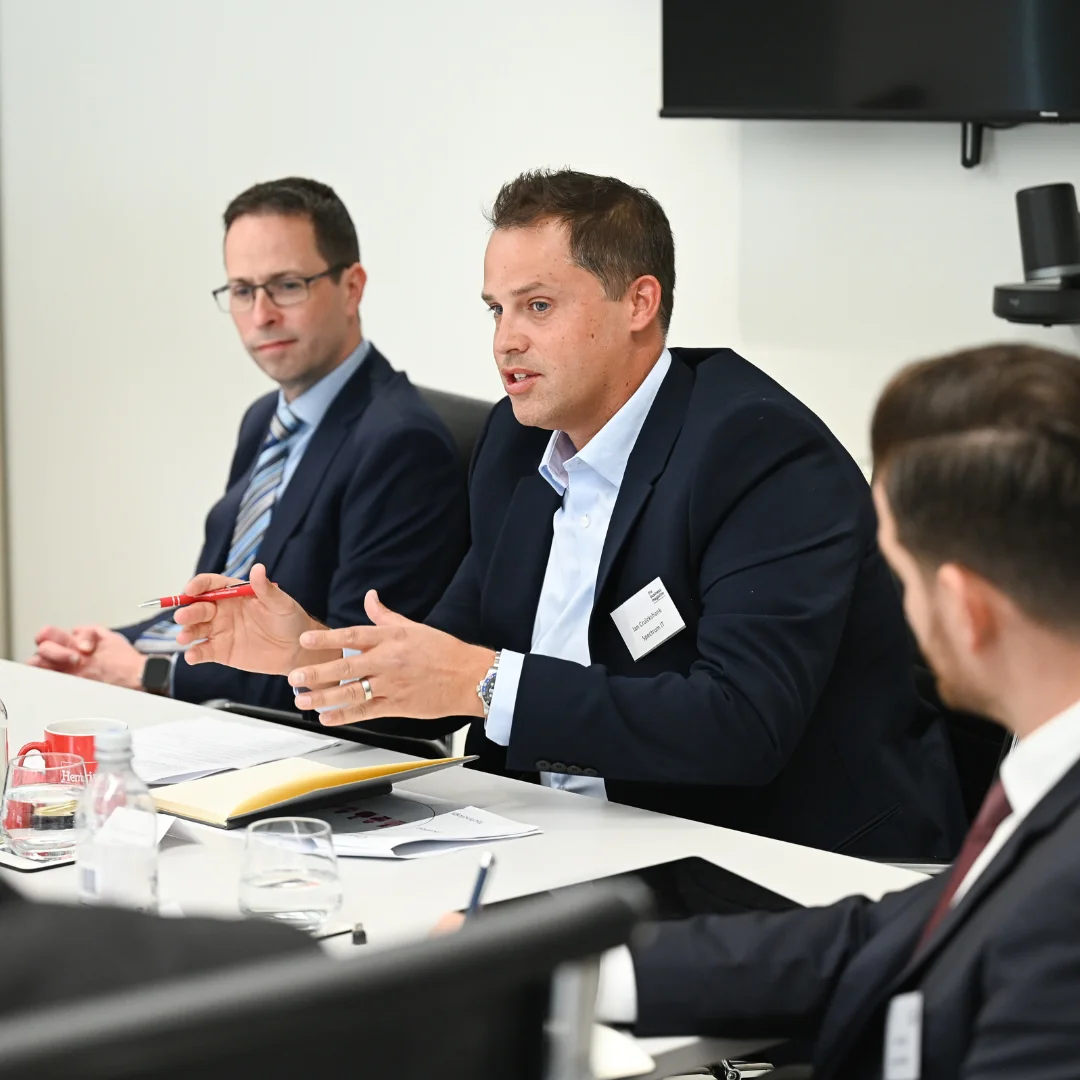
"More UK investment, the highest market confidence since 2023, rising contract demand and an increase in permanent hiring all point to a positive outlook for 2026. There are some great projects on the horizon." Ian Cruickshank, Managing Director, Spectrum IT
The insights from 2025 point to a market that has stabilised and is moving forward with greater confidence. While hiring remains measured, there are clear signs of renewed investment, stronger market sentiment and a more positive outlook as organisation plan for 2026.
As businesses balance transformation, talent availability and cost control, early planning will be key. Understanding where demand is growing, where risks are emerging and how teams are evolving will help organisations make more informed hiring decisions in the year ahead.
Plan your 2026 hiring strategy now and speak with Ian to discuss how these insights apply to your organisation. Leave your details below and we’ll be in touch.
Talk to us about your 2026 hiring plans

2024 Insights
Read our 2024 Insights roundup where we highlight key tech hiring trends, including specialist skills demand, hybrid work shifts, AI growth, salary patterns, and community engagement.

Recruitment Tips
We have a selection of recruitment tips to help with practical advice on securing top IT talent, agency-internal teamwork, cyber hiring focus, AI integration, and contractor recruitment strategies.

Candidate Resources
Take a look at our candidate tips providing job search guidance, from improving LinkedIn profiles and interviews to staying relevant in tech, AI trends, and remote working.